
If you are searching for forklift certification renewal in Ontario, the most important point is that Ontario does not set one universal expiry date for every forklift training certificate. Whether you need refresher training, a competency reassessment or full retraining usually depends on your employer’s policy, your demonstrated skills, the equipment and workplace involved, and any changes or safety concerns.
Ontario’s powered lift-truck guidance centres on competent operation. A training document can show that you completed a course, but it does not automatically authorize you to operate every forklift at every workplace. Your employer must still determine whether you are competent and authorized for the specific work.
What forklift certification renewal means in Ontario
“Renewal” is common workplace language, but it can suggest a fixed government process that does not apply to every forklift operator in Ontario. Ontario does not create one universal public forklift licence, one mandatory expiry period or one standard renewal examination for all lift-truck operators.
Instead, employers need to ensure that operators are competent for the truck, attachments, loads, hazards and procedures involved. The provincial guidance describes a competent person as someone qualified through knowledge, training and experience who understands the applicable requirements and workplace dangers. You can review the practical distinction between a certificate and ongoing competency in these forklift operator training requirements.
That means an employer may require refresher training or reassessment even when a document has no printed expiry date. Conversely, a document that appears current does not remove the need for supervision, site orientation or employer authorization.
The three parts of forklift authorization

1. Provider-issued training documentation
A training provider may issue a certificate, photo licence or other proof of successful completion. This document records what the provider says you completed under its course process. It may be useful when applying for work or updating an employer file, but its meaning depends on the course, the equipment covered and the employer’s acceptance criteria.
2. Demonstrated operator competence
Competence is more than remembering classroom material. It includes applying safe operating procedures, inspecting the truck and attachments, mounting correctly, maintaining a proper driving position, handling loads and responding appropriately to workplace hazards.
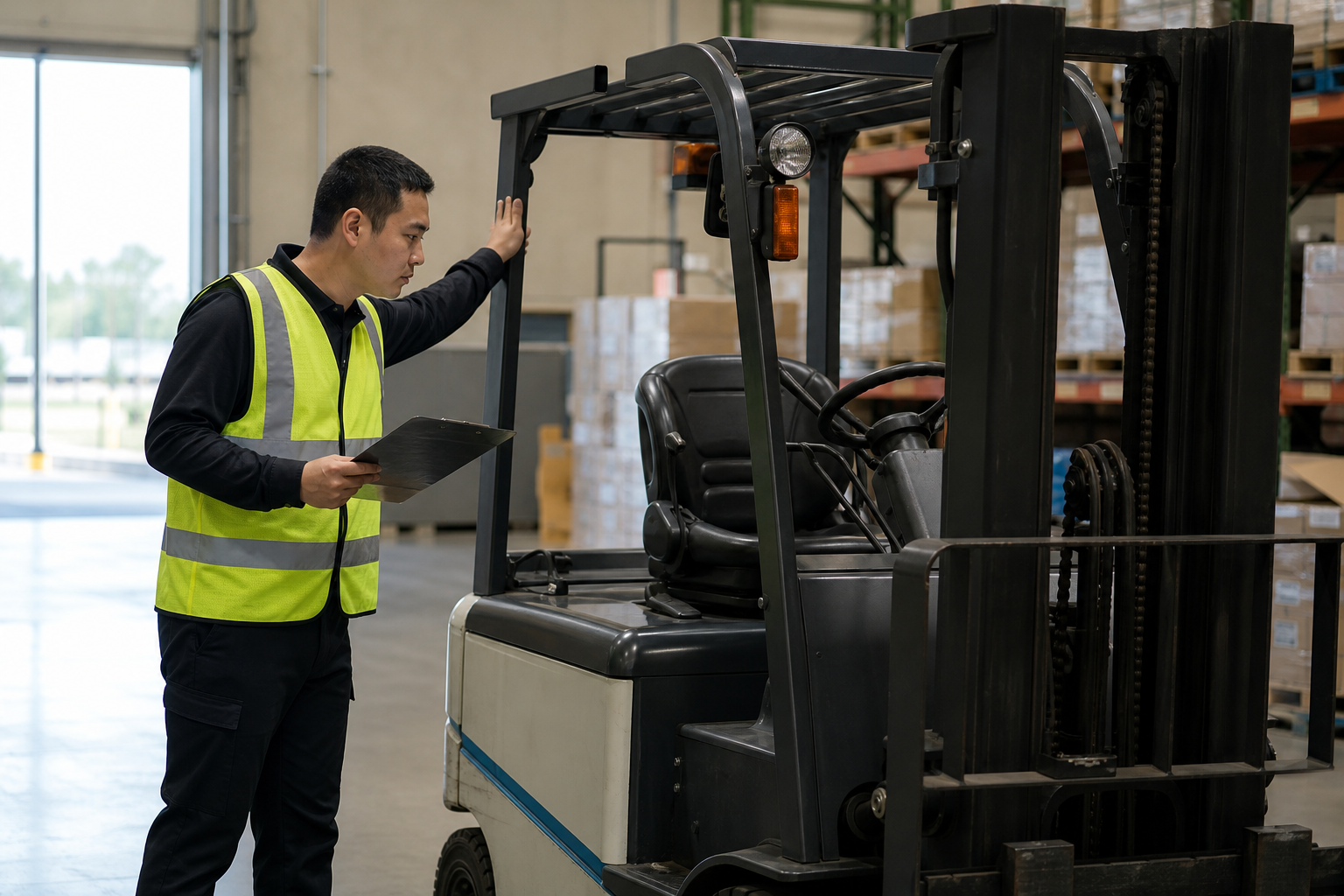
Ontario’s training objectives identify a pre-operation visual inspection of the truck and attachments as a skill expected of a competent operator. The inspection should use the employer’s process and identify unsafe conditions before operation.
3. Employer authorization
Your employer decides whether you may operate the specific equipment in the specific workplace, subject to applicable legal and safety requirements. Authorization may require a practical evaluation, site orientation, supervision or additional instruction on traffic routes, loading areas, pedestrian controls and emergency procedures.
A certificate therefore does not automatically authorize operation on a different forklift, with a different attachment, at a new site or under changed procedures. Ask the employer what must be completed before you operate independently.
When should forklift training be updated?
There is no single renewal trigger for every operator. The following situations commonly justify asking for reassessment, refresher instruction or retraining:
- New equipment: You are moving from one forklift type to another, using a different control layout or operating equipment with new attachments.
- Changed loads: Load dimensions, weights, centres of gravity or stacking methods have changed.
- Workplace changes: Traffic patterns, floor conditions, racking, ramps, pedestrian routes or loading areas have been altered.
- New procedures: The employer has introduced different inspection, charging, fuelling, parking, reporting or communication procedures.
- Incident or near miss: A collision, dropped load, tip-over, property damage or near miss indicates that the operator, equipment or system needs review.
- Unsafe observation: A supervisor sees speeding, poor load positioning, failure to inspect, unsafe turning or another recurring concern.
- Extended absence: The operator has not used a forklift for a significant period and needs to rebuild familiarity under supervision.
- Performance concerns: The operator cannot consistently demonstrate safe control, load handling or hazard awareness.
Ontario guidance supports employer decisions about supervision, reassessment, refresher instruction and retraining based on the equipment, workplace hazards, procedures, incidents and observed performance. The right response may be a short practical review, a formal competency evaluation or a broader retraining programme.
Which type of renewal training do you need?
| Situation | Likely response | What should be confirmed |
|---|---|---|
| Routine employer review or extended time away | Refresher training or supervised practice | Inspection, controls, parking, load handling and core workplace procedures |
| New forklift, attachment or load type | Equipment-specific instruction and practical evaluation | Capacity, stability, attachment use, visibility and operating limits |
| Incident, near miss or unsafe observation | Targeted retraining, reassessment or both | The cause of the event, corrected behaviours and safe performance under supervision |
| Move to a new employer or site | Site-specific orientation and authorization | Traffic routes, hazards, procedures, emergency controls and the employer’s evaluation process |
Do not choose a course solely because its title says “renewal” or “recertification.” First identify why the training is needed and what the employer must document. A classroom-only update may not address a practical skill gap, while a full course may be unnecessary if the actual need is a supervised evaluation on a new attachment.
Skills and safety topics to verify
Whether you need a brief refresher or a more complete programme, ask how the training will test real operating ability. At minimum, the review should be relevant to the truck and work you will perform.
- Pre-operation inspection of the truck, attachments and safety equipment.
- Safe mounting, dismounting and driving position.
- Load capacity, stability, load positioning and visibility.
- Travel speed, turning, reversing and pedestrian interaction.
- Ramps, uneven surfaces, dock edges, doors and restricted spaces.
- Parking, shutdown, charging or refuelling procedures.
- Workplace communication, reporting and emergency procedures.
- Practical operation under supervision, followed by documented evaluation.
Ontario’s guidance specifically connects competent operation with inspecting the truck and attachments before use. Treat inspection as an active skill, not a box to tick on a form. You should understand what defects require the truck to be removed from service and reported.
How to choose renewal or refresher training
Before enrolling, ask the provider and your employer the same questions. This prevents you from paying for documentation that does not meet the workplace requirement.
- Which forklift type, attachment and load configuration will the practical training cover?
- Will an instructor observe you operating the equipment, or is the course theory-only?
- What inspection, load-handling and workplace-safety topics are included?
- What evaluation do you need to pass, and how will the result be recorded?
- What exact certificate, photo licence or completion document will you receive?
- Will your employer accept that document for its current workplace?
- What site orientation, supervised hours or internal authorization will still be required?
- Can the schedule accommodate your work commitments without removing practical training?
Practical instruction should match the employer’s equipment and procedures as closely as possible. A provider may teach general lift-truck principles, but the employer remains responsible for site-specific hazards, supervision and authorization. Details on practical forklift instruction can help you compare hands-on training, documentation and workplace authorization questions.
A Toronto and Scarborough training option to discuss with your employer
JAZ Truck, Bus & Forklift Driving School offers forklift training for learners in the Toronto and Scarborough area. Its published training information describes hands-on instruction covering vehicle inspection, load handling, load security, workplace safety, operational maintenance, refuelling and recharging, along with in-class video training.
JAZ also lists OSL-certified instructors, one-on-one coaching and training at 1750 Brimley St Unit 100 in Scarborough. Its information states that successful forklift trainees receive certification and a photo licence. Confirm the current document details, practical evaluation and employer acceptance before booking, because completion of a course does not by itself replace workplace authorization.
Forklift renewal checklist before you book
- Ask what triggered the renewal request. Find out whether the issue is an employer review, an equipment change, an incident, an absence or a performance concern.
- Identify the equipment. Record the forklift type, attachments, load characteristics and operating environment involved.
- Confirm the practical requirement. Ask whether you need supervised practice, a formal competency evaluation, retraining or site orientation.
- Check the documentation. Request the provider’s document name and confirm exactly what it records.
- Verify employer acceptance. Obtain confirmation before paying for a course, especially if you are changing employers or workplaces.
- Clarify post-course authorization. Ask who evaluates you at the workplace, how supervision works and when independent operation is permitted.
- Keep your records. Retain the certificate, evaluation result, course details and employer authorization in case your training history needs to be reviewed.
Training should be matched to the workplace rather than treated as a stand-alone document. Equipment selection, hazard controls, maintenance, supervision and site procedures all affect safe operation, so transportation and workplace training resources can provide useful context when comparing training environments, including workplace-focused transport training.
Frequently asked questions
Does forklift certification expire after three years in Ontario?
Ontario does not set one universal three-year expiry period for every forklift training certificate. Your employer may set a review or retraining interval, but that is an employer policy rather than a single province-wide expiry rule.
Who decides when forklift refresher training is needed?
The employer assesses whether an operator remains competent and authorized for the work. The decision may consider equipment, workplace hazards, procedures, incidents, observed performance and the operator’s recent experience.
Is a forklift training certificate enough to operate at a new workplace?
Usually, no. A certificate may document course completion, but a new employer may require site orientation, equipment-specific instruction, supervised practice or an internal evaluation before authorization.
What should retraining cover after a forklift incident or near miss?
It should address the event’s cause and any related skill or system gap. Depending on the circumstances, this may include inspection, load handling, visibility, speed, traffic controls, communication, emergency procedures and a documented practical reassessment.
Is forklift operator training the same as an Ontario driver’s licence or DZ endorsement?
No. Forklift operator training concerns workplace operation of powered lift trucks. A Class A or DZ licence and an Air Brake Z endorsement relate to specific highway vehicles and licensing requirements. They do not automatically establish forklift competence.
Conclusion: confirm competency, documentation and authorization
Forklift certification renewal in Ontario is not usually a matter of finding a universal expiry date. Start by asking what your employer needs and why: a refresher, a practical competency assessment, incident-related retraining, equipment-specific instruction or site authorization.
Then choose training that includes practical evaluation and matches the equipment, loads and hazards involved. Confirm what document you will receive, whether the employer accepts it and what supervision or orientation remains before you operate independently.
For forklift training in the Toronto and Scarborough area, discuss your equipment, documentation needs and employer requirements with JAZ Truck, Bus & Forklift Driving School before enrolling.