
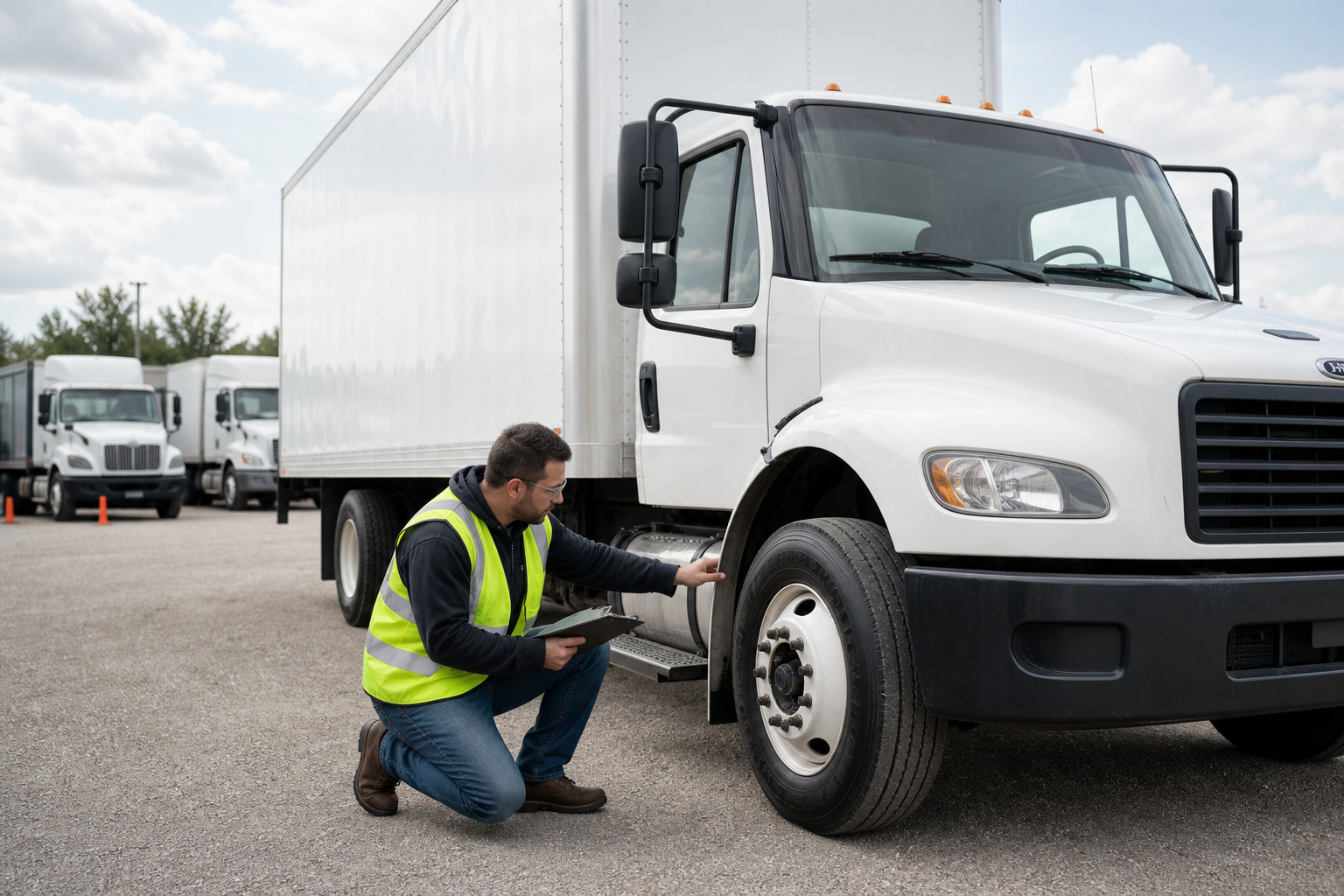
In Ontario, “driver of truck” usually means a truck driver or commercial truck driver, but the required licence depends on the vehicle. Class A is the tractor-trailer pathway, while Class D generally covers a truck over 11,000 kg or a combination with a towed vehicle no heavier than 4,600 kg. Before enrolling, identify the vehicle and work you want, then verify current Ontario requirements and choose training that includes inspection, manoeuvring and road-test preparation. Source: Get a truck driver’s licence | ontario.ca.
What “driver of truck” means in Ontario
The usual terms are truck driver, commercial truck driver and transport truck driver. “Driver of truck” is understandable, but it does not identify the vehicle, licence or type of work. Related reading: Truck-Mounted Carpet Cleaning Benefits: When Is It the Right Choice?.
A truck driver is the broadest everyday term. A commercial truck driver operates a truck as part of work, while a tractor-trailer driver operates a power unit with a trailer. A straight-body truck has the cargo area built onto the same vehicle instead of using a separate tractor and trailer.
Ontario’s licence decision depends on the truck’s weight, the weight of the towed vehicle, whether it is a tractor-trailer and whether it has air brakes. Job Bank distinguishes between Class D or equivalent licensing for straight-body trucks and Class A licensing for tractor-trailers.
Before speaking with a school, write down the vehicle you expect to drive, the trailer’s gross weight if applicable, and the work you want to pursue. Those answers are more useful than starting with a course name.
Class A or DZ: match the licence to the vehicle
Choose the licence based on the truck configuration, not the general job title. Class A is the usual pathway for tractor-trailer work, while Class D is generally associated with heavier straight trucks and combinations where the towed vehicle does not exceed 4,600 kg.
| Pathway | Vehicle direction | Typical decision | Training question |
|---|---|---|---|
| Class A | Tractor-trailer combinations and combinations where towed vehicles exceed 4,600 kg | Consider this route for tractor-trailer work | Does the programme include mandatory Class A training before the full road test? |
| Class D | A truck over 11,000 kg, or a combination where the towed vehicle is not over 4,600 kg | Consider this route for qualifying straight-truck work | Does the course prepare you for the exact truck and road test? |
Ontario’s MTO Truck Handbook states that Class A covers tractor-trailer combinations and Class D covers a truck over 11,000 kg or a combination with a towed vehicle no heavier than 4,600 kg. Check the Ontario truck licence requirements against the specific vehicle before enrolling.
Use these decision rules
- Tractor and semi-trailer: investigate Class A training.
- Qualifying heavy straight truck: investigate Class D or DZ training.
- Air brakes: ask how the Air Brake (Z) endorsement is handled. It is not automatically included with every truck licence.
- Vehicle not yet identified: ask for the truck’s weight, trailer weight and braking system first.
People often say “AZ” for tractor-trailer driving. Ontario’s current system uses the Class A licence, with the Z endorsement referring to air-brake privileges where applicable.
If you plan to drive a straight truck, review the requirements for DZ truck driver training. Drivers who intend to operate tractor-trailers should compare Class A truck driver training requirements instead of assuming Class D is sufficient.
The Ontario pathway from interest to truck driver
Becoming a truck driver in Ontario involves licence selection, eligibility checks, knowledge preparation, practical training and testing. A school can coach your skills, but the licence is issued through the provincial process. Source: Mandatory training for Class A driver’s licence applicants | ontario.ca.
- Identify the vehicle and licence. Start with the truck configuration, trailer weight and braking system.
- Check eligibility. Review current age, licence, medical, vision and documentation requirements through Ontario’s official channels.
- Complete knowledge and administrative steps. Ask which tests, forms and appointments are required before practical training or a road-test booking.
- Complete mandatory Class A training when required. Ontario states that Class A applicants must complete mandatory training before the road test. It includes at least 103.5 hours of instruction.
- Build practical control. Practise inspection, handling, turns, backing, mirror use, space management and safe decisions under supervision.
- Prepare for the test vehicle and assessment. Confirm the vehicle, assessed manoeuvres and review process.
- Complete the road test. Training completion does not itself issue a licence.
- Check employer-specific requirements. Employers may have additional expectations about equipment, records, endorsements or experience.
Ontario determines licensing rules and tests; a school provides instruction, practice and preparation within its programme.
What useful truck-driver training should develop
Useful training turns written knowledge into repeatable actions. You should know what to inspect, where to position the vehicle, what to watch in the mirrors and how to correct a mistake safely.
Inspection and vehicle awareness
Pre-trip practice should follow a consistent sequence instead of relying on memorized words. You need to recognize visible defects, understand major components and identify what requires attention before moving.
For DZ learners, the JAZ course page lists pre-trip truck inspection, log-book cab inspection, turning, backing and use of a truck or bus for the MTO road test. Ask how much of the programme involves demonstration, supervised practice and repetition.
Manoeuvring and road control
Commercial vehicles need more space and earlier planning than passenger cars. Training should develop controlled turns, lane position, mirror scanning, following distance, speed management and deliberate backing.
A useful practice cycle is to perform the manoeuvre, receive specific corrections, repeat it and explain what changed. That is more valuable than rushed attempts without feedback.
Records, safety and judgment
Truck driving also involves decisions outside the steering wheel. Training should connect vehicle condition, inspection findings, records, loading instructions and road conditions to the decision to proceed, pause or report a problem.
JAZ offers OSL-certified instructors, up-to-date equipment, hands-on instruction and one-on-one behind-the-wheel classes. Ask how those features apply to the programme you are considering.
What the work is really like
A truck driver’s responsibilities typically combine vehicle inspection, driving, observation, paperwork and safe decision-making. The work is not only moving freight between locations.
Hypothetical example: You arrive before departure, inspect the truck, review trip information and identify issues requiring attention. During the route, you manage space, adjust to traffic and weather, make controlled turns and record required information. At a stop, you may handle delivery paperwork or loading instructions before continuing or reporting a delay.
The role calls for sustained concentration and patience. A large vehicle gives you less room to recover from poor positioning, late braking or a rushed turn.
Schedule and physical demands vary by employer and assignment. Ask about start times, loading duties, routes, time away from home, vehicle type and paperwork before accepting a role.
If truck driving is not your best fit
Truck driving is one commercial path, not the only one. Choose the vehicle and work setting first, then investigate the related licence or certificate.
- Truck training: for straight trucks or tractor-trailers used in freight, delivery or commercial transport.
- BZ or the applicable bus pathway: for school-bus work. Confirm the licence class matching the bus and passenger capacity.
- CZ training: for coach or other large passenger vehicles.
- Forklift training: for warehouse or logistics work focused on moving loads within a workplace.
JAZ provides A, BZ, CZ, DZ and Air Brake (Z) road-test preparation, as well as forklift training, in the Toronto and Scarborough area. Your eligibility and the employer’s equipment determine which path applies.
Questions to ask before enrolling
- Which licence or endorsement is this programme designed to support?
- Does Class A training include the mandatory programme required before the full road test?
- How many hours are classroom, yard-based and behind the wheel?
- How much driving time is one-on-one?
- Which truck will I practise in, and does it match the road-test vehicle?
- How are inspection, backing, turning, mirror use and defect recognition taught?
- How is Air Brake (Z) preparation handled?
- What schedule is available for part-time learners?
- What is the total tuition and which fees are separate?
- What are the cancellation, missed-lesson and additional-practice terms?
- What financing options and employment support are available?
JAZ offers OSL-certified instruction, up-to-date equipment, one-on-one coaching and convenient schedules. Ask for the current programme, price, schedule and road-test arrangements before committing.
Beginner mistakes that make training harder
Choosing a course before identifying the truck
Mistake: enrolling because the job title sounds right. Fix: record the truck’s weight, trailer weight, braking system and intended work first.
Assuming DZ and Class A are interchangeable
Mistake: treating any commercial licence as a route to every truck-driving job. Fix: match the licence to the vehicle.
Treating the Z endorsement as automatic
Mistake: assuming truck training automatically provides air-brake privileges. Fix: ask how eligibility, instruction and testing apply.
Memorizing an inspection without performing it
Mistake: learning component names without following a physical sequence. Fix: practise aloud and in order until the routine is controlled.
Confusing course completion with an outcome
Mistake: assuming training guarantees a licence, test pass, job or income. Fix: treat training as preparation for provincial testing and employer requirements.
Frequently asked questions about becoming a truck driver
Can I start training before I know whether I need Class A or DZ?
You can discuss options with a school, but identify the vehicle and licence pathway before paying. Weight, trailer configuration and braking system determine the appropriate direction.
Does truck-driving school guarantee a licence or a job?
No. Training builds knowledge, practical skills and readiness, but it does not guarantee a licence, test pass, employment, wages or a particular assignment.
What should I ask about hands-on driving time?
Ask how much time is behind the wheel, whether practice is one-on-one, which truck you will use, how feedback is recorded and whether inspection, backing, turning and road-test manoeuvres are repeated.
Is a truck driver the same as a tractor-trailer driver?
No. “Truck driver” is broad and can include straight-truck and tractor-trailer drivers. A tractor-trailer driver operates a specific combination that generally points toward Class A in Ontario.
Choose your next training conversation
Write down the vehicle, intended work, trailer weight and braking system, then verify the Ontario licence path before comparing tuition or schedules. If you have chosen straight-truck work, speak with JAZ Truck, Bus & Forklift Driving School about its D-truck driver training. If you are still comparing truck, bus and forklift pathways, review the school’s commercial driving courses to identify the appropriate next conversation.