
What this checklist does and how to use it
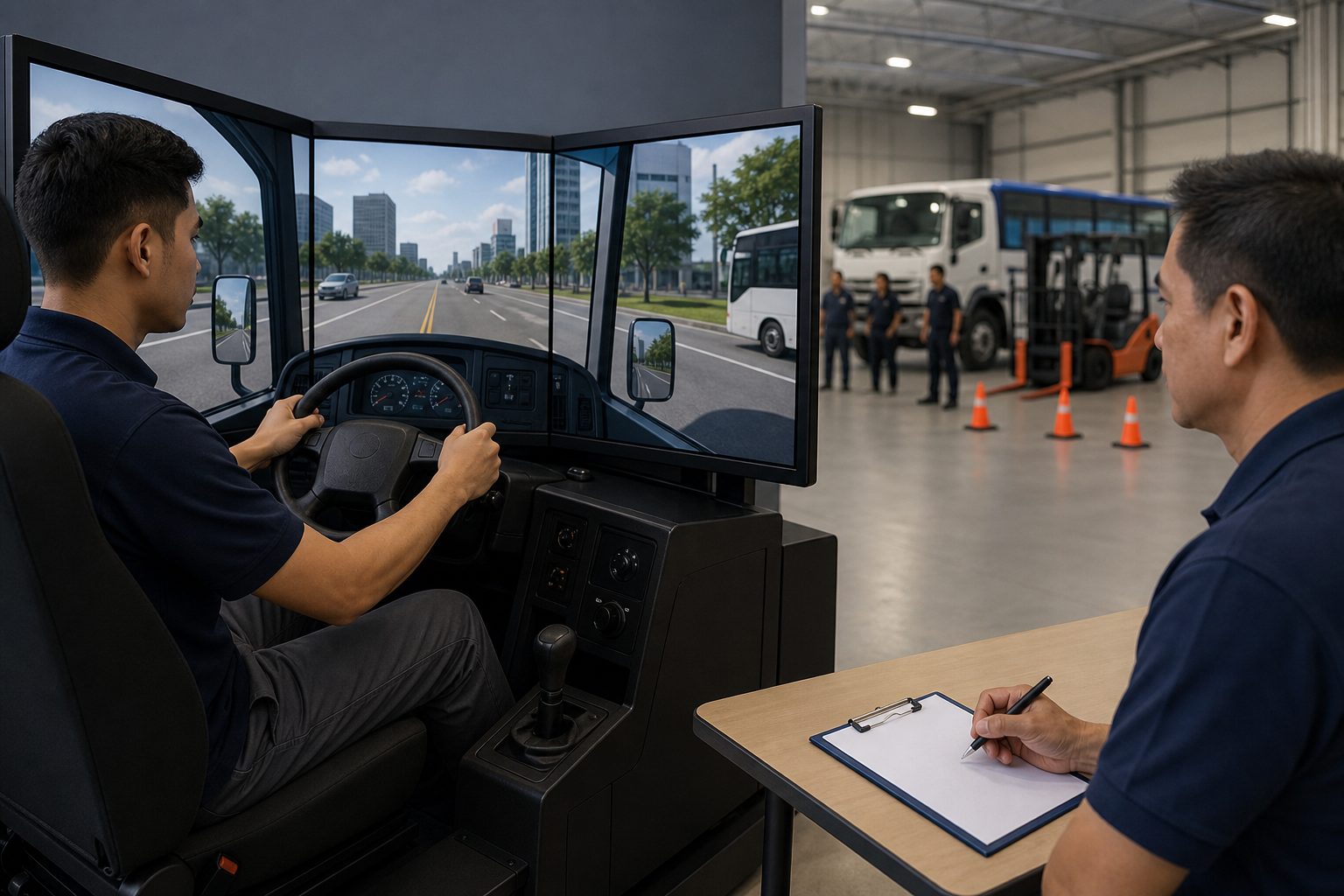
This driving simulator training decision checklist gives commercial driver candidates in Toronto and Scarborough seven concrete criteria to evaluate a simulator offering as part of a MELT program. Each numbered item explains what to verify, why it matters for MELT or MTO expectations, and practical steps you can take by phone or on site. The checklist does not assume simulator hours automatically satisfy provincial behind‑the‑wheel requirements; always get any hours credit in writing from the school and, if necessary, confirm with the Ministry of Transportation. For related first-party details, review A Practical Guide to bz School bus Driver Training.
The 7 checklist items you must verify
1. Regulatory fit and claimed credit
What to ask: Will the school count simulator sessions as classroom, flexible, or behind‑the‑wheel hours in its MELT program? Ontario guidance lists minimum training‑hour expectations for novice commercial programs — 20 hours classroom, 10 hours behind‑the‑wheel, and 10 hours flexible instruction — so any claimed substitution must be explicit in the course package. See the Ontario Driver’s Handbook for the program components to review when choosing a school (Ontario Driver’s Handbook).
Why this matters: If simulator time is not accepted as behind‑the‑wheel time, you will still need the standard in‑vehicle hours to meet MELT requirements. Before you pay, request a written statement that shows exactly how simulator hours will be logged in your training record.
How to verify: Request the school’s written hours policy and a sample student training plan that shows hours allocation. If answers are unclear, ask the school to provide an email you can show an MTO representative for clarification.
2. Simulator fidelity and scenario scope
What to ask: Which simulator make and model is used, does it support full commercial cab controls, and what scenarios are included (highway, urban, night, severe weather, coupling and uncoupling, emergency braking)? Fidelity means how closely controls, sightlines and vehicle behaviour match the real vehicle.
Why this matters: Higher‑fidelity simulators let you practise decision making and hazard perception in situations that are difficult or dangerous to recreate in live traffic. The federal On‑road Practicum Guide notes that simulators allow programmed scenarios and built‑in data collection, which speeds instructor planning and provides objective trainee reports (On‑road Practicum Guide).
How to verify: Ask for the simulator model and a demo. If you cannot visit, request a manufacturer specification sheet or a video of the simulator running a representative commercial scenario.
3. Instructor simulator training plus OSL credentials
What to ask: Are the instructors who run simulator sessions also OSL‑certified for commercial driver training, and do they have documented simulator operator training? Confirm who will be present during sessions and who will interpret results for lesson planning.
Why this matters: OSL certification confirms instructors meet Ontario standards for commercial programs. Simulator operator training ensures instructors can set scenarios, interpret metrics, and convert simulator feedback into targeted behind‑the‑wheel coaching. The Ontario Driver’s Handbook highlights instructor qualifications and regular upgrading as elements of a quality program (Ontario Driver’s Handbook).
How to verify: Ask for instructor names and proof of OSL certification, or a redacted copy. Request a brief description of the simulator training the instructor completed and records of any recent professional upgrading.
4. Data collection and exportable trainee reports
What to ask: Does the simulator produce trainee reports with objective metrics such as reaction time, speed control, braking events, scenario completion, and instructor notes? Are those reports exportable to PDF and stored in your student file?
Why this matters: Systems with built‑in data collection and printed reports help instructors and trainees track progress and save administrative time, according to the On‑road Practicum Guide (On‑road Practicum Guide). Measurable feedback is also useful evidence for regulators or employers.
How to verify: Request a redacted sample trainee report that shows scenario details, timestamps, objective scores and instructor comments. Confirm you will receive a copy after each session and that the report can be appended to your training record.
5. Scenario customizability for commercial skills
What to ask: Can the system replicate tasks specific to your licence class, such as coupling and uncoupling trailers, air‑brake practice, multi‑axle weight transfer, or coach bus manoeuvres? Can an instructor add custom hazards or adjust difficulty?
Why this matters: A light‑vehicle simulator is limited for tractor‑trailer, coach or bus training. You need a system that models the dynamics and tasks relevant to Class A, BZ, CZ or DZ training and to an Air Brake (Z) endorsement.
How to verify: Request a scenario list and ask the instructor to demonstrate or describe a scenario tailored to your target licence. If the school cannot show class‑specific scenarios, treat the simulator offering as limited to generic hazard perception work.
6. Integration plan with one‑on‑one behind‑the‑wheel lessons and road‑test preparation
What to ask: How does the school sequence simulator sessions with in‑vehicle lessons and formal road‑test preparation? Ask for a sample schedule that shows simulator practice, debriefs, targeted behind‑the‑wheel coaching and road‑test readiness checks.
Why this matters: Simulator practice is most effective when it prepares judgment, hazard recognition and timing before you replicate those skills in the vehicle with an OSL instructor. Ontario guidance recommends low student/teacher ratios and one‑on‑one in‑vehicle work; ensure simulators are a complement rather than a replacement for personal coaching (Ontario Driver’s Handbook).
How to verify: Ask for a week‑by‑week sample plan showing when simulator sessions occur, how long debriefs last, and which in‑vehicle skills are targeted next. A refusal to provide a written integration plan is a reasonable warning sign.
7. Logistics, cost, financing and employer recognition
What to ask: Where do sessions take place, what is their typical length, are sessions one‑on‑one or group based, and what is the cancellation policy? Do package prices include simulator time, and is simulator training eligible for financing? If employment is a goal, do local recruiting partners accept simulator reports as part of a candidate file?
Why this matters: Cost and convenience affect whether simulator training is practical. Some schools include simulator time in package pricing; others charge add‑ons. Confirm whether financing options apply to simulator sessions. For example, JAZ Truck, Bus & Forklift Driving School offers financing options for MELT programs; ask whether simulator sessions are eligible by contacting the school directly (JAZ Truck, Bus & Forklift Driving School).
How to verify: Request a full price list for simulator sessions, ask whether they are included in packages, and get written confirmation of financing eligibility or employer recognition if these factors influence your decision.
Regulatory clarity: how MTO and MELT guidance affects simulator use

Ontario defines minimum hour expectations for novice driver programs. The Driver’s Handbook lists the 20 hours classroom, 10 hours behind‑the‑wheel and 10 hours flexible instruction minimum. Confirm whether a school will record simulator time as classroom, flexible or behind‑the‑wheel in your MELT training plan, and obtain a written statement you can present to an MTO representative if required (Ontario Driver’s Handbook).
Exact questions to ask JAZ or any Toronto school before you pay
- Do you have a simulator on site? What make and model is it?
- Can I see the simulator curriculum and a sample trainee report after a session?
- Will simulator hours be recorded as classroom, flexible, or behind‑the‑wheel hours in your MELT program?
- Are the instructors OSL certified and trained to operate the simulator?
- How do you translate simulator feedback into the in‑vehicle lesson plan?
- Are simulator sessions included in package pricing or eligible for financing?
- Do any recruiting partners or employers accept simulator reports as part of a candidate file?
Start by calling the school and request a sample report and written hours policy before committing. For program details, visit JAZ Truck, Bus & Forklift Driving School.
How to weigh simulator value versus its limits

Where simulators add clear value: early hazard perception practice, rare or hazardous scenario exposure, repeatable night and weather scenarios, initial air‑brake and coupling decision sequences, and objective progress reports without extra emissions. The On‑road Practicum Guide highlights these advantages for structured pre‑training drives and reporting (On‑road Practicum Guide).
Where in‑vehicle time remains essential: developing vehicle feel, brake and vibration feedback, real coupling and uncoupling with a live trailer, handling actual load shifts and road surface unpredictability. A simulator cannot reproduce all sensory inputs, so one‑on‑one behind‑the‑wheel instruction remains essential for MELT road‑test readiness.
Instructor qualifications, simulator operator training and reporting you must see
Before you buy simulator time, ask for: proof of OSL instructor certification, evidence of simulator operator training for everyone who runs scenarios, a redacted sample trainee report showing objective metrics and instructor notes, and a written procedure explaining how simulator outcomes map to individual behind‑the‑wheel lessons. Also request the school’s policy on instructor upgrading, as recommended in Ontario guidance (Ontario Driver’s Handbook).
Common objections, risks and clear decision criteria
Motion sickness: request a short trial session. If you experience simulator sickness, it is not a practical training tool for you.
Overreliance on simulation: require a written integration plan showing how simulator practice leads to targeted in‑vehicle coaching. If a school claims simulation replaces all road hours without documented regulatory approval, treat that claim with caution.
Employer recognition: if hiring requirements mandate specific in‑vehicle hours or evidence, ask recruiters whether they accept simulator reports. Use employer feedback to decide whether simulator evidence will strengthen your application.
Next steps: confirm availability and book a local assessment
Call the school and run through the exact verification questions above, request sample reports and written hours policies, and book a short trial assessment to test simulator comfort and instructor feedback. For program details and contact information, visit JAZ Truck, Bus & Forklift Driving School or call the number listed on the website to confirm offerings and financing options.
Frequently asked questions
Will simulator hours count toward MTO or MELT required behind‑the‑wheel hours?
Not automatically. Ontario sets minimum training‑hour expectations and schools vary in how they record simulator time. Request the school’s written policy showing how simulator hours are recorded in the MELT training plan and, if necessary, seek written confirmation from the Ministry of Transportation (Ontario Driver’s Handbook).
How do I verify a simulator’s make, model and the quality of trainee reports?
Ask the school for the simulator manufacturer and model, a specification sheet or demo video, and a redacted sample trainee report. A credible program will provide scenario lists, the metrics included in reports, and at least one sample report showing measurable feedback and instructor comments. The federal guide highlights the reporting advantage of simulators for training programs (On‑road Practicum Guide).
Can simulator training reduce the number of in‑vehicle hours I need before a road test?
Only if your school has a documented policy that explicitly states so and that policy is accepted by MTO/MELT for your course. Do not assume reduction without written confirmation. Treat simulator time primarily as preparation to make in‑vehicle lessons more efficient rather than as a guaranteed hour substitute.
What should I ask to confirm an instructor is OSL certified and simulator‑trained?
Request the instructor’s name and a copy or screenshot of their OSL certificate. Ask what formal simulator operator training they completed, who provided it, and when they last upgraded that training. A school should be willing to show proof or provide a written statement summarizing instructor qualifications.
Final call to action: For MELT program details, course offerings and to confirm simulator availability, contact JAZ Truck, Bus & Forklift Driving School.
Comments are closed