
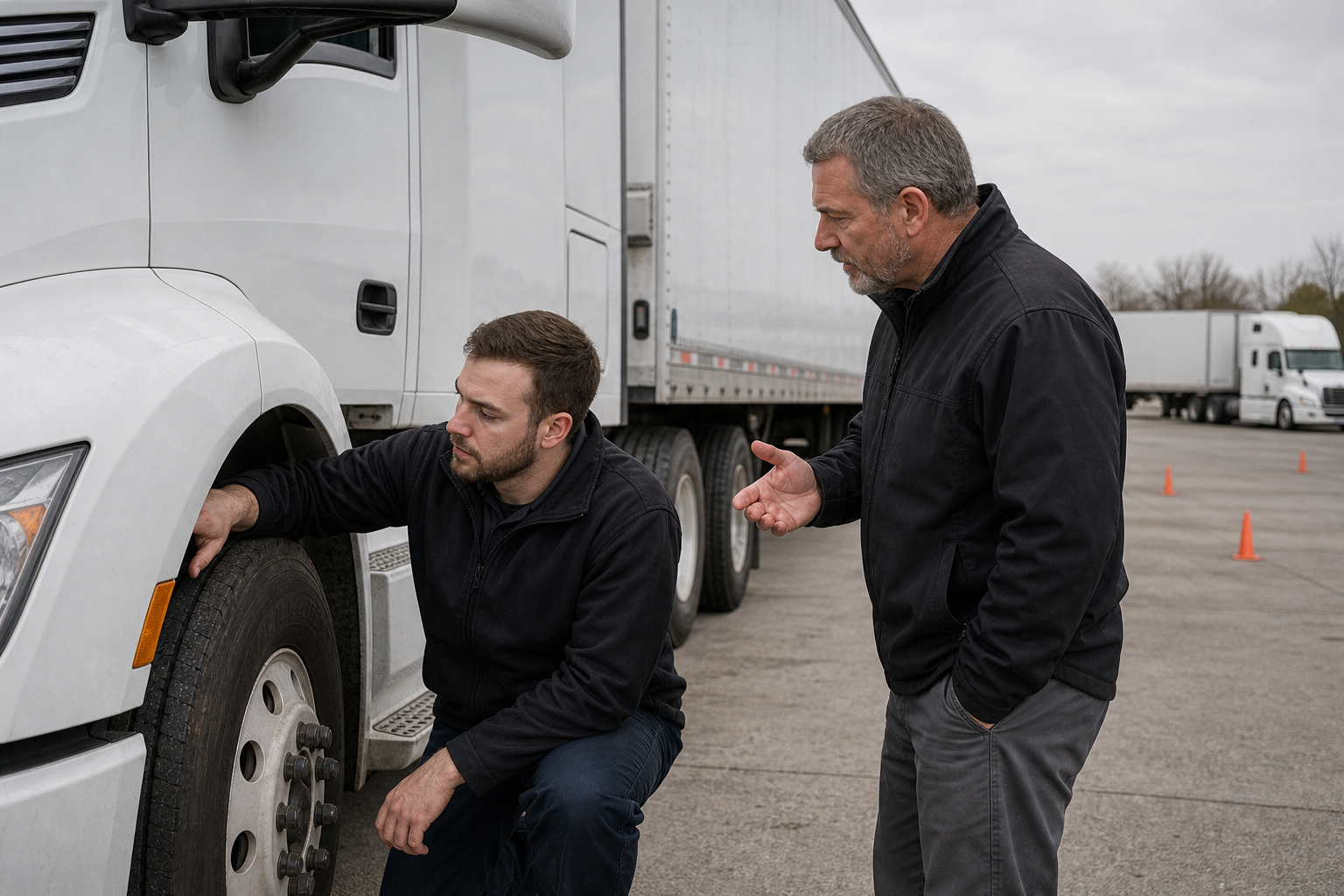
Ontario driver training requirements depend on the vehicle, licence class, endorsement or workplace outcome you need. Class A applicants must complete at least 103.5 hours of mandatory entry-level training before the applicable road test, while DZ, bus, Air Brake (Z) and forklift routes have different requirements.
Use a requirements-first approach: identify the vehicle, confirm the official licence or workplace outcome, check your eligibility and documents, then compare training that covers the required assessment. Completing a course does not automatically grant a provincial licence, an Air Brake (Z) endorsement, forklift authorization or employment.
Start with the vehicle and the outcome you need
The correct training route starts with the vehicle you expect to operate. A tractor-trailer, straight truck, school bus, coach bus and forklift each involve different equipment, responsibilities and approval steps.
Ontario has several bus licence types, and the applicable class depends on the vehicle and passenger use. Bus applicants generally need written and road tests, while a government-approved course may also be required for the specific class. Review the current Ontario bus licence requirements before registering.
For truck applicants, Class A and Class D are separate routes. Class A is the relevant path for qualifying tractor-trailer combinations, while Class D applies to trucks or combinations where the towed vehicle does not exceed 4,600 kg. The vehicle and job you are targeting should determine which requirements you investigate.
Ontario driver training requirements by pathway
This table is a screening tool, not a substitute for the current provincial requirements. It separates licensing conditions from training or workplace steps that you may need to arrange with a provider or employer.
| Pathway | Outcome | Requirements to check | What training should clarify |
|---|---|---|---|
| Class A | Tractor-trailer driving | Eligible Ontario licence, vision test, medical report, knowledge test, mandatory entry-level training and a qualifying road test | How the programme meets the current MELT requirement, what practical instruction is included and how road-test preparation is organized |
| Class D or DZ | Straight-truck work and qualifying truck combinations | Eligible licence, age and applicable medical or vision standards, followed by the required road-test process | Vehicle type, inspection, manoeuvring, backing and whether Air Brake (Z) requirements apply |
| Class B or E | School-bus driving | Age, licence, medical and vision requirements, School Bus Driver Improvement Course, background check and applicable tests | Which school-bus licence class the programme supports and which government-required course components are included or separate |
| Class C or F | Regular bus or coach-bus work | Age, eligible licence, medical and vision standards, applicable knowledge test and road test | Vehicle dimensions, passenger safety, inspection routines, road skills and any Air Brake (Z) needs |
| Air Brake (Z) | Operation of an air-brake-equipped truck or bus where the endorsement applies | Applicable knowledge and practical examinations matched to the vehicle and licence plan | Which examinations the course addresses and what completion record or next step follows |
| Forklift | Warehouse, logistics and industrial equipment work | Equipment-specific instruction, practical assessment and workplace authorization | Truck type, attachments, loads, site hazards and the employer’s authorization process |
If you need to distinguish Class A from Class D before reviewing individual courses, this explanation of truck licence and training paths provides additional context.
Class A requirements and the current MELT rule
To pursue a full Class A licence with no restrictions, Ontario lists several requirements: you must be at least 18, hold an eligible Ontario licence, pass a vision test, submit a valid medical report, pass the large-truck and tractor-trailer knowledge test, complete mandatory entry-level training and pass a qualifying road test. The current Ontario Class A licensing process sets out the official conditions.
Mandatory entry-level training, commonly called MELT, must be completed before the applicable Class A road test. The current provincial requirement is at least 103.5 hours of instruction covering entry-level knowledge and skills for operating a large truck safely. Ontario updates the driving record after the training is completed. See the mandatory Class A training requirement for the current rule.
Training providers may organize those hours differently, so ask for a written breakdown of classroom, yard and in-truck instruction. Confirm which subjects and practical skills are included, how attendance is recorded and what preparation is offered before the road test.
As of November 19, 2026, the current Class A arrangement remains MELT. Ontario has announced a future standardized entry-level truck-driver curriculum expected to be implemented in early 2027, but that future arrangement has not replaced the current requirement on the publication date.
Do you need previous driving experience for tractor-trailer training? Previous commercial driving experience is not stated as a universal prerequisite in the supplied Class A requirements. You still need to satisfy the applicable licence, medical, testing and training conditions before taking the road-test pathway.
How long does it take to become a truck driver in Canada? There is no single national duration. In Ontario, the Class A training requirement alone is at least 103.5 hours, while the full timeline also includes licence preparation, medical and vision steps, knowledge testing, scheduling, practical skill development and the road test.
DZ and straight-truck requirements
DZ training fits a learner whose goal involves a Class D vehicle rather than a full tractor-trailer combination. The supplied Class D information describes a truck or combination where the towed vehicle is not over 4,600 kg. It also identifies age 18 or older, a valid Ontario G or higher licence, and medical and vision standards as requirements to review.
Do you need a G licence before DZ training? The supplied DZ requirements state that applicants must hold a valid Ontario G or higher licence. Settle that condition before booking, along with the medical and vision standards that apply to your application.
Ask a DZ provider how its practical training addresses inspection, vehicle control, turning, backing and the applicable road test. If the intended vehicle uses air brakes, clarify whether Air Brake (Z) preparation is part of the plan or must be arranged separately.
Before choosing DZ, identify the vehicle used in the job you are pursuing. A straight truck, a truck with a heavier trailer and an air-brake-equipped vehicle can create different training and endorsement questions.
Bus training requirements: school bus versus coach bus
“BZ” and “CZ” are common training terms, but you should match them to the official Ontario licence class for the bus you intend to drive. School-bus and coach-bus routes are not interchangeable.
School bus: Class B or E
Ontario’s Class B and E school-bus pathway includes being at least 21, holding an eligible Ontario licence, meeting medical and vision standards, completing a government-approved School Bus Driver Improvement Course, passing a Criminal Record and Judicial Matters Check, meeting the applicable demerit-point condition and passing the required tests. Check the official Class B and E requirements before enrolling.
Class B generally applies to a school bus seating more than 24 passengers, while Class E generally applies to a school bus seating up to 24 passengers. Ask the provider to identify which licence class its course supports instead of assuming that “BZ training” answers that question.
When comparing a school-bus programme, ask how it addresses inspection, passenger safety, observation, railway crossings, rules of the road and the School Bus Driver Improvement Course. These are separate questions from the provider’s tuition, vehicle and road-test support.
Coach or regular bus: Class C or F
Ontario’s Class C and F pathways apply to different bus operations than the school-bus classes. Applicants must meet age, licence, medical and vision requirements and pass the applicable knowledge and road tests. Class C includes a knowledge test about operating buses and trucks. The current Class C and F handbook guidance explains the distinction.
Coach-bus preparation should address vehicle dimensions and controls, passenger safety, hazard awareness, smooth handling, inspection routines and road-test skills. Air-brake fundamentals may also matter where the vehicle and licensing plan require them. Confirm the exact vehicle class, passenger use and endorsement needs before paying a deposit.
Air Brake (Z) training: when it fits the plan
Air Brake (Z) training is relevant when the truck or bus you plan to operate requires the endorsement. It is one part of a larger licensing plan, not a replacement for Class A, Class D, Class B, Class E, Class C or Class F requirements.
Ask which knowledge and practical examinations apply, whether the training vehicle matches your intended licence route, what preparation is included and what you receive after successful completion. The correct sequence depends on the vehicle and licence outcome.
Forklift training is not a commercial driver licence
Forklift training prepares a person to operate workplace equipment. It does not create a provincial truck or bus licence, and completing a course does not automatically authorize operation of every forklift at every workplace.
Before registering, identify the equipment and conditions involved: counterbalance or another truck type, attachments, load characteristics, racking, pedestrian traffic, dock areas and indoor or outdoor surfaces. Training should include controls, inspection, load handling, travel, parking and hazard awareness related to the equipment and workplace.
The employer may still need to assess your competence and authorize you for its equipment and site. Ask what assessment record or certificate the course provides, what equipment is covered and what additional workplace orientation is required.
The learner journey from eligibility to testing
A requirements-first process reduces the risk of enrolling in the wrong route. Use this sequence:
- Define the vehicle and outcome. Identify whether you need a tractor-trailer, straight-truck, school-bus, coach-bus, Air Brake (Z) or forklift pathway.
- Match the terminology to the official outcome. Confirm that “Class A,” “DZ,” “BZ” or “CZ” course wording corresponds to the Ontario licence class or workplace assessment you need.
- Check eligibility. Review age, current licence, medical and vision standards, driving-record conditions and any required background check.
- Gather documents. Depending on the route, you may need proof of identity, Ontario residence, legal presence in Canada, eligibility to work, medical documentation or a Criminal Record and Judicial Matters Check.
- Complete required courses or knowledge tests. Class A applicants must complete MELT before the applicable road test. School-bus applicants must account for the approved School Bus Driver Improvement Course.
- Verify the training plan. Ask what classroom, yard, vehicle, inspection, manoeuvring and on-road components are included.
- Practise for the assessment. Use instructor feedback to improve the specific skills measured by the road test or workplace assessment.
- Complete the test or workplace assessment. Course completion is preparation. The licence, endorsement or workplace authorization follows the applicable provincial or employer process.
For a broader document and prerequisite review, use this Ontario commercial licence requirements checklist alongside the current provincial guidance for your specific class.
What classroom, practical and workplace training each accomplishes
Classroom instruction gives you the rules, terminology and decision framework behind safe operation. Depending on the route, it may address vehicle systems, documents, cargo securement, emergencies, hours of service, passenger responsibilities or workplace hazards.
Yard and behind-the-wheel training turn that knowledge into repeatable actions. You may practise inspections, starting and stopping, steering, turning, backing, coupling where applicable, space management and responses to changing traffic conditions. Ask how instructor feedback is recorded and how weak skills are targeted before testing.
Workplace-equipment training has a different emphasis. A forklift operator must understand the actual truck, load and site hazards, then demonstrate competence under conditions relevant to the employer. A commercial road test and a forklift workplace assessment measure different outcomes.
JAZ describes OSL-certified instructors for its truck, bus and forklift courses, current equipment, one-on-one behind-the-wheel classes and part-time scheduling in the Toronto and Scarborough area. Use those details as questions for your comparison: ask how much practical time, which vehicle and which assessment preparation are included in the programme you are considering.
Documents and readiness checks before you enrol
Use this checklist before paying tuition:
- Have you selected the exact vehicle and licence or workplace outcome?
- Do you hold the required Ontario licence for the route, such as a G or higher licence for the supplied DZ pathway?
- Do you meet the applicable minimum age?
- Have you checked medical and vision requirements and arranged any required report?
- For Class A, have you planned for the knowledge test, MELT and qualifying road test?
- For Class B or E, have you planned for the approved School Bus Driver Improvement Course and Criminal Record and Judicial Matters Check?
- Can you provide documents confirming Ontario residence, legal presence and work eligibility where the application requires them?
- Does your driving record meet the conditions for the intended bus licence?
- Can your work and family schedule support the required classroom and practical sessions?
- For forklift work, have you identified the truck type, attachments, loads and workplace hazards?
From January 1, 2027, Class A road-test applicants must have held a Class G or higher licence for at least six months. Because implementation dates and individual circumstances matter, read the current MTO handbook and ask the licensing authority about your application before relying on an older checklist.
Questions to ask a Toronto or Scarborough training provider
A useful provider should answer these questions clearly:
- Which official licence class or workplace equipment does this programme support?
- Which Ontario requirements are included, and which must I complete separately?
- What are the age, licence, medical, vision and document prerequisites?
- How much time is classroom-based, yard-based and on the road?
- Which vehicle will I practise in, and is it suitable for the applicable road test?
- Does the programme include inspection, manoeuvring and targeted road-test preparation?
- For school-bus training, is the School Bus Driver Improvement Course included or separate?
- For air brakes, which endorsement examinations and practical checks does the training address?
- For forklift training, which truck types and workplace conditions are covered, and what authorization remains with the employer?
- What is the full tuition, what extra charges apply, and what financing options are available?
- What schedule is realistic for a part-time learner, and what happens if a session must be rescheduled?
- What completion records or documents will I receive?
JAZ Truck, Bus & Forklift Driving School serves learners in Toronto and Scarborough. Its listed pathways include Class A tractor-trailer, DZ, BZ, CZ, Air Brake (Z) and forklift training. Confirm the programme, price, schedule and availability for your intended route before enrolling.
FAQ: practical questions about Ontario training requirements
How long does driver training take in Ontario?
Duration varies by licence, required courses, provider schedule and your progress. The current Class A requirement is at least 103.5 hours of mandatory entry-level instruction. DZ, bus, Air Brake (Z) and forklift programmes should be quoted separately because their durations are not established by the supplied evidence.
Does completing a course give me a licence or forklift authorization?
No. A course prepares you for the applicable test or workplace assessment. You still need to complete the provincial licensing or endorsement process, or obtain employer authorization for forklift operation.
How do I verify that a training provider fits my Ontario licensing pathway?
Ask the provider to name the official licence class, list the prerequisites, explain which government-required courses are included, identify the training vehicle and describe the testing or assessment step. Compare those answers with the current Ontario government guidance for your class.
What should I confirm before booking commercial driver training?
Confirm the licence class, required documents, medical and vision steps, classroom and practical hours, training vehicle, road-test preparation, total tuition and any separate courses or assessments. This prevents a course title from being mistaken for a complete licensing pathway.
Choose the next step that matches your goal
Write down the vehicle you want to operate, the work you want to pursue and the licence or workplace outcome you need. Then ask a provider to confirm your prerequisites, training schedule, practical vehicle, total cost and next assessment before you enrol. For a tractor-trailer goal, review Class A tractor-trailer training with JAZ Truck, Bus & Forklift Driving School. For another route, ask the school about the programme that matches your intended vehicle.