
Last updated: October 2026
What OSL certification means for commercial driver learners
OSL refers to the Ontario Safety League. Its current training information includes instructor-related courses such as Air Brake Instructor training, Fleet Driver Trainer training, and School Bus Driver Improvement Instructor training. That makes OSL certification relevant to more than a generic teaching credential: the significance depends on the course, vehicle class, and subject the instructor is qualified to teach.
A school advertising OSL-certified instructors is therefore giving prospective students a reason to ask for more detail. The designation does not, by itself, tell you the instructor’s complete employment history, the number of hours you will drive, or whether every instructor at the school holds the same certification. Those points should be confirmed before you enrol.
What the designation can tell you
Instructor training can support a more structured approach to explaining vehicle systems, safety procedures, driving decisions, and practical manoeuvres. In a commercial program, that structure may help an instructor break a difficult skill into smaller steps, demonstrate it, observe your attempt, and give you a specific correction.
It can also encourage a consistent focus on risk management. A strong instructor does not treat safety as a classroom topic that ends when the vehicle moves. Mirror use, space management, controlled braking, inspection routines, communication, and hazard awareness should remain part of the coaching process in the yard and on the road.
What the designation does not prove on its own
- It does not prove that every instructor at a school is OSL certified.
- It does not identify which OSL course or instructional area applies to a particular instructor.
- It does not guarantee a specific number of classroom, yard, or road hours.
- It does not replace the need to examine the school’s vehicles, schedule, curriculum, and assessment process.
- It does not guarantee that a learner will pass a licensing examination or road test.
The practical interpretation is straightforward: regard OSL certification as one quality indicator, then investigate how the school turns instructor preparation into daily learning conditions.
How to evaluate programs with OSL-certified instructors
Two schools may use similar language about certified instructors while offering very different learner experiences. Compare the complete program rather than choosing solely on the designation. The questions below help you identify whether instruction is organized, relevant, and sufficiently practical.
Confirm the instructor and course connection
Ask which instructors will teach your course and what certification applies to their role. For example, an Air Brake (Z) endorsement course, a school-bus program, a tractor-trailer program, and forklift training involve different equipment and learning outcomes. The relevant question is not simply whether someone is OSL certified, but whether the instructor’s preparation and experience fit the instruction you need.
Also ask whether the same instructor teaches the classroom, yard, and road portions. A change of instructor is not automatically a problem, but the handoff should be organized. Your progress notes, identified weaknesses, and next practice goals should follow you from one part of the program to the next.
Examine the balance of theory and practice
Commercial driving requires more than memorizing rules. You need to understand vehicle systems and safe decisions, then apply that understanding while controlling a larger or more specialized vehicle. Ask how the program divides time between classroom learning, controlled-yard practice, and on-road instruction.
A useful answer should describe the sequence rather than provide only a general promise of hands-on training. You might expect foundational concepts first, followed by demonstrations, guided practice, independent attempts, feedback, and repeat drills. Ask whether practice time is shared among several students and how much time each learner actually spends driving or operating the equipment.
Review the assessment and feedback process
Good coaching makes performance visible. Ask whether instructors use checklists, progress records, written evaluations, or another method to show what you can do consistently and what still needs work. Find out how often feedback is provided and whether you receive a clear practice priority after each session.
Feedback should be specific enough to act on. “Be more careful” is less useful than an explanation of when to check a mirror, how to set up a turn, where to look while backing, or which inspection step was missed. Ask how the school decides that you are ready to move from one skill or phase to the next.
Check equipment and operating conditions
Training equipment should be relevant to your goal. A learner preparing for Class A tractor-trailer work needs practice with the controls, dimensions, coupling procedures, inspection requirements, and manoeuvres associated with that type of vehicle. A bus learner needs instruction that reflects passenger-vehicle considerations, while forklift training should match the equipment category and workplace tasks being taught.
Ask whether vehicles are maintained, whether you will practise in conditions that resemble your expected work, and what happens if equipment is unavailable. Modern equipment can be helpful, but the key issue is whether it allows you to develop the safe, repeatable skills required for your intended licence or job.
Look at scheduling and continuity
Flexible scheduling can help part-time learners, but flexibility should not create long gaps that make skills difficult to retain. Ask how sessions are booked, how cancellations are handled, and whether you can maintain a regular learning rhythm. If your primary instructor is unavailable, confirm who provides the replacement instruction and how your existing progress is communicated.
Benefits of learning with OSL-certified instructors
The value of an OSL-certified instructor is most apparent when certification supports clear teaching, disciplined observation, and relevant practice. These benefits are not automatic, but they are useful standards for evaluating the training you receive.
Clearer demonstrations and explanations
Large vehicles and specialized equipment can make a simple instruction difficult to interpret. A structured instructor can explain the purpose of a procedure, demonstrate it in a logical order, identify the visual reference points you should use, and then watch you repeat it. This approach is particularly useful for backing, coupling and uncoupling, inspection routines, braking, and positioning in tight spaces.
Earlier correction of unsafe habits
Small habits can become difficult to change when they are repeated. Regular observation gives an instructor opportunities to address issues such as incomplete mirror checks, rushed turns, poor following distance, inconsistent speed control, or skipped inspection steps before those behaviours become routine.
More consistent progression
Commercial driver training is easier to manage when each session has a purpose. A learner may begin with controls and basic safety checks, progress to controlled manoeuvres, and then apply those skills in increasingly complex traffic situations. A progress-based approach helps prevent a student from spending every session on familiar exercises while avoiding the skills that still require attention.
Better connection between classroom and vehicle
Rules and technical information become more useful when an instructor connects them to a real decision. A discussion about braking can lead to practice with speed, space, and controlled stops. A lesson about vehicle inspection can become a repeatable walk-around routine. This connection helps learners understand not only what to do, but why the procedure matters.
More purposeful road-test preparation
Road-test preparation should be based on the requirements and manoeuvres relevant to the licence category, not on last-minute repetition alone. An instructor can help you identify the skills that must be automatic, practise them in an appropriate order, and reduce avoidable errors such as missed observations, poor lane position, incomplete checks, or weak communication.
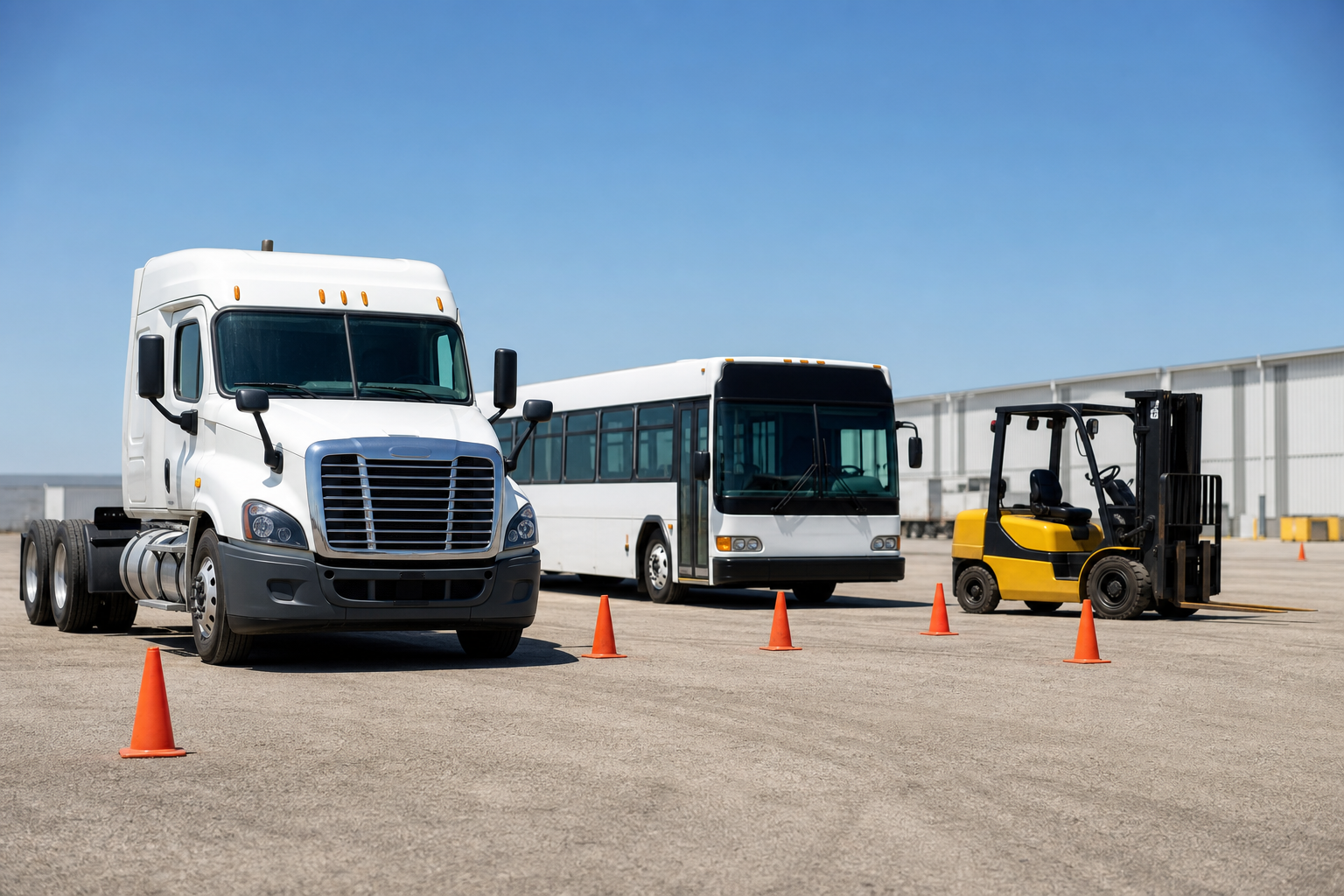
JAZ Truck, Bus & Forklift Driving School describes its programs as combining classroom learning with hands-on, in-vehicle training and road-test preparation. It offers training for Class A tractor-trailer, BZ school bus, CZ coach bus, DZ straight truck, the Air Brake (Z) endorsement, and forklift certification in the Toronto and Scarborough area. Prospective learners should still confirm the exact course structure and instructor assignment for their chosen program.
Questions to ask before enrolling
A consultation is an opportunity to test how specifically a provider can explain its training. Bring the following questions and record the answers so you can compare schools on equivalent information.
Questions about certification
- Which instructors will teach my course?
- What does OSL certification cover for those instructors?
- Does the certification relate to my vehicle class or subject, such as air brakes or school-bus instruction?
- How can I verify the current certification status of the instructor assigned to me?
- Will a certified instructor lead the classroom, practical, and road portions of my training?
Questions about lesson design
- What happens during the first lesson?
- How are classroom, yard, and road sessions sequenced?
- How much individual driving or equipment time does each session include?
- What skills must I demonstrate before progressing?
- How are lessons adapted if I am a beginner or already have driving experience?
Questions about feedback and readiness
- Do instructors use written checklists or progress records?
- How will I know which skills to practise between sessions?
- Who decides when I am ready for a road test or final evaluation?
- What happens if I need additional practice in one area?
- How are missed lessons, cancellations, or instructor substitutions handled?
Questions about equipment and logistics
- Which vehicle or equipment will I use?
- Does the equipment reflect the licence or job I am pursuing?
- Where does practical training take place?
- What scheduling options are available for part-time learners?
- What costs, documents, prerequisites, and administrative steps should I understand before enrolling?
Specific answers are more valuable than broad assurances. If a provider cannot explain who will teach you, how progress is recorded, or how practical time is allocated, ask for clarification before making a decision.
A step-by-step way to choose the right program
Use this process to turn your research into a practical decision. It keeps the focus on the licence, equipment, and instruction you actually need.
- Define your goal. Identify whether you are pursuing Class A tractor-trailer training, BZ school bus, CZ coach bus, DZ straight truck, an Air Brake (Z) endorsement, or forklift certification. Your goal determines which instructor experience and equipment are relevant.
- List your constraints. Note your preferred schedule, travel distance within the Toronto or Scarborough area, previous driving experience, and any time by which you hope to complete training.
- Shortlist suitable providers. Look for schools that clearly describe the course, practical training, equipment, instructor role, and road-test preparation rather than relying on a certification label alone.
- Request course details. Ask for the lesson sequence, practical-time allocation, assessment method, instructor coverage, and policies for absences or additional practice.
- Compare the learning environment. Consider whether the school provides one-on-one or small-group coaching, relevant vehicles, regular feedback, and a schedule that allows steady progression.
- Verify the instructor assignment. Find out who will teach your course and how that person’s OSL certification or other qualifications relate to your training objective.
- Make a readiness plan. Ask what you should study before the first session, how you will practise between lessons, and which milestones indicate that you are ready for an evaluation.
- Choose based on fit. Select the program that gives you the clearest, most credible explanation of how it will develop your skills – not merely the provider using the most impressive wording.
This framework also helps you identify questions that remain unanswered. A provider does not need to promise identical results for every learner, but it should be able to explain its process and the support available when a learner needs more time.
What training with a certified instructor can look like
The exact sequence varies by licence and program, but a well-organized commercial driving course commonly connects several learning stages. Each stage should reinforce the others rather than operate as an isolated lesson.
Classroom foundations
Classroom instruction may cover safe driving decisions, vehicle systems, inspections, documentation, traffic rules, defensive driving, and the responsibilities associated with the vehicle category. Ask how the instructor uses examples and scenarios to connect these subjects to practical driving.
Vehicle familiarization and inspection
Before moving into more demanding manoeuvres, learners need to understand the vehicle’s controls, visibility limitations, mirrors, braking systems, warning devices, and emergency procedures. A repeatable inspection routine should be practised until you can perform it methodically rather than relying on memory prompts from the instructor.
Controlled-yard practice
The yard provides a safer setting for learning vehicle position, turning space, backing, coupling where applicable, and communication. The instructor should explain reference points and setup, demonstrate the manoeuvre, observe your attempt, and provide a correction that you can apply on the next repetition.
On-road instruction
Road lessons may introduce city streets, intersections, lane changes, hills, highway conditions, traffic interaction, and changing hazards as appropriate to the program. The instructor’s role is to help you manage space, speed, observation, communication, and decision-making – not merely to tell you where to drive.
Assessment and debrief
After practice, a useful debrief identifies what was completed safely, what was inconsistent, and what should be repeated. Ask for one or two priority corrections instead of trying to fix every issue at once. Your next session should build on that feedback.
Final preparation
Before an evaluation or road test, preparation should cover the relevant inspection, manoeuvres, vehicle control, observations, and communication standards. Readiness is stronger when you can perform skills consistently without continuous prompting and can explain the safety reasoning behind your actions.
How to prepare for training and learn more effectively
An OSL-certified instructor can provide structure, but your habits between lessons affect how quickly that structure becomes skill. Arrive prepared to observe, practise, ask questions, and apply corrections.
Study before practical sessions
Review the relevant vehicle systems, inspection sequence, terminology, and safety concepts before you enter the vehicle. This allows practical time to focus on application rather than introducing every idea for the first time.
Keep a simple progress log
After each lesson, write down the manoeuvres practised, the correction given, and the drill you need to repeat. A short record can reveal patterns, such as difficulty with a particular setup, observation, or control input, and gives you a focused question for the next session.
Ask for demonstrations and smaller steps
If a manoeuvre feels confusing, ask the instructor to demonstrate it again and divide it into stages. You might need to work separately on setup, steering, mirror checks, speed, and stopping position before combining them. Asking for a specific explanation is more productive than repeating the full manoeuvre without knowing what changed.
Build safety routines
Use the same deliberate sequence for inspections, mirror checks, lane changes, braking, and vehicle positioning. Consistency reduces the chance that an important step disappears when you are busy managing traffic or a new environment.
Protect your concentration
Commercial vehicle training requires attention and physical coordination. Sleep adequately, arrive hydrated, bring required documents and study materials, and tell the instructor if fatigue or another issue may affect your concentration. A productive lesson is safer and more useful than trying to push through when you cannot focus.
Misconceptions to avoid when comparing instructors
“Certification guarantees a pass.”
No instructor designation can guarantee a licensing result. Your outcome also depends on preparation, attendance, practice, vehicle familiarity, decision-making, and performance on the day of the evaluation.
“One certified instructor means the entire school is certified.”
Ask which people teach your specific course and which sessions they lead. A school may have different instructors for different vehicle classes or subjects, so the relevant assignment should be clear.
“Certification matters more than practical experience.”
Formal instructor preparation and relevant operating experience serve different purposes. Look for a provider that can explain both the instructor’s teaching credentials and the experience that informs the training.
“More hours automatically mean better training.”
Practice time matters, but its quality and relevance matter too. A shorter session with clear objectives, active driving time, precise feedback, and targeted repetition may be more useful than unstructured time in a vehicle.
“A flexible schedule means the program lacks structure.”
Flexible scheduling can suit people who work or study, particularly in the Toronto and Scarborough area. The important question is whether the school maintains continuity, records progress, and schedules enough regular practice for skills to develop.
Frequently asked questions about OSL-certified instructors
How can I verify that an instructor is OSL certified?
Ask the training provider to identify the instructor assigned to your course, explain which OSL certification or instructor course applies, and describe how current status is maintained. The available evidence confirms that OSL offers instructor-related training and that JAZ advertises OSL-certified instructors, but it does not independently identify each JAZ instructor or verify every individual certificate. Requesting course-specific confirmation is therefore the appropriate next step.
Does OSL certification replace real-world commercial driving experience?
No. Instructor certification and relevant operating experience address different parts of teaching quality. Ask how the instructor’s experience relates to your vehicle class, then look for coaching that combines practical examples with clear demonstrations, observation, and feedback.
Is OSL certification relevant to Air Brake or school-bus training?
It can be relevant because the Ontario Safety League currently lists Air Brake Instructor training and School Bus Driver Improvement Instructor training among its offerings. The exact relevance depends on the instructor’s course and the program you are taking. Confirm that the assigned instructor’s preparation matches your subject rather than assuming every OSL designation covers every course.
Will I receive one-on-one coaching from an OSL-certified instructor?
That depends on the provider’s staffing and course format. Ask how practical time is shared, who sits with you during behind-the-wheel instruction, and whether the certified instructor leads the core coaching. JAZ describes one-on-one, behind-the-wheel coaching as part of its training approach, but confirm the arrangement for your selected program before enrolling.
Choose training based on evidence and fit
OSL-certified instructors can be an important part of a structured commercial driver-training experience, but the designation should lead to better questions rather than end your research. Compare the instructor assigned to your course, the relevance of the certification, practical driving time, equipment, feedback process, schedule, and road-test preparation.
To discuss available commercial driver-training options in the Toronto and Scarborough area, contact JAZ Truck, Bus & Forklift Driving School and ask for course-specific details before you decide.
Comments are closed