
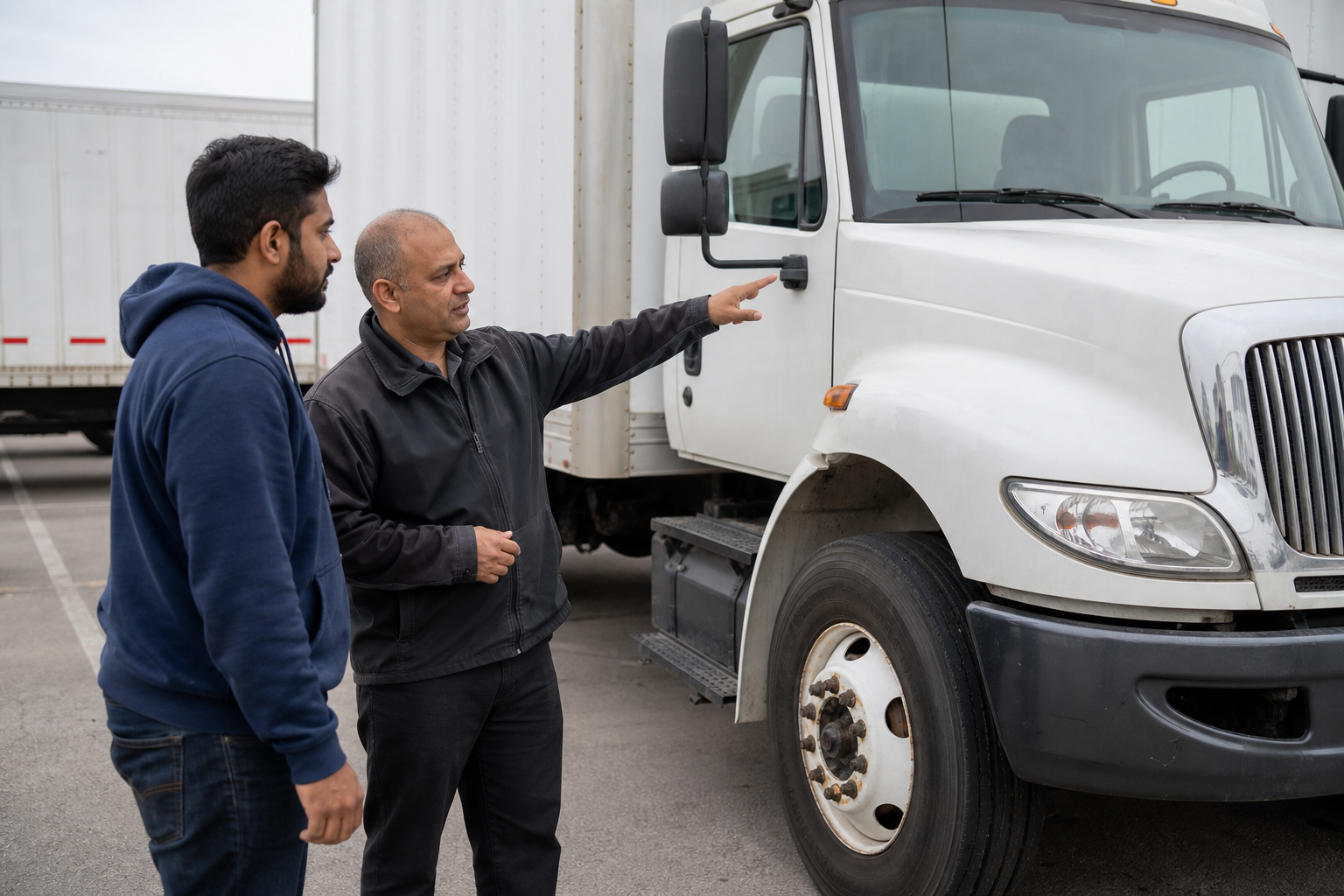
DZ straight-truck training is preparation for Ontario’s Class D licensing pathway. It is designed for drivers who plan to operate qualifying heavy trucks or truck combinations, but it is not a universal credential for every commercial driving job. The right choice depends on the vehicle’s weight, the towed vehicle, its brake system, and the work you intend to do.
For Scarborough learners, the practical question is not simply which truck driving school is nearby. First confirm that Class D matches the vehicle and job, then compare eligibility requirements, hands-on practice, road-test arrangements, schedule, and written course terms.
What DZ straight-truck training means in Ontario
In everyday conversation, “DZ training” usually refers to training for an Ontario Class D licence. The licence is tied to the type and weight of vehicle you will operate, rather than to a broad job title such as “truck driver.”
Ontario states that a Class D licence permits a driver to operate a truck with a gross weight or registered gross weight above 11,000 kg. It also covers a truck and towed-vehicle combination above that threshold when the towed vehicle does not exceed 4,600 kg. Read the current provincial requirements carefully because the vehicle configuration determines whether Class D is appropriate.
JAZ Truck, Bus & Forklift Driving School offers DZ/Class D truck driver training at its Scarborough location. Its course information identifies the pathway as suitable for the Class D scope and lists practical preparation for the Ontario Ministry of Transportation road test. You can review the specific DZ truck driver training topics before asking for current course details.
Who DZ training is for, and who should consider another pathway

DZ training may fit someone whose intended work involves a qualifying straight truck or a permitted truck combination. It can be relevant to people changing careers, pursuing commercial driving work, or seeking training for a specific employer requirement. The job description and the vehicle’s specifications should come before the course decision.
| Training pathway | When it may fit | What not to assume |
|---|---|---|
| DZ or Class D | A qualifying heavy straight truck or permitted truck combination | It does not automatically qualify you for every truck or bus role |
| Class A | Work involving a tractor-trailer licensing pathway | DZ training is not a substitute for Class A training |
| BZ or CZ | School bus or coach bus driving goals | Bus training follows a different pathway from straight-truck training |
| Forklift training | Warehouse, logistics, or workplace forklift operation | Forklift certification is not the same as a provincial truck licence |
If you are unsure which pathway matches your intended role, ask the employer what licence, endorsements, vehicle type, and experience it requires. A course provider can explain its training, but the employer and Ontario’s current licensing information should guide the legal and job-specific decision.
Eligibility and requirements to confirm before training
JAZ’s DZ course page lists three starting requirements: you must be at least 18 years old, hold a valid Ontario G licence or higher, and meet medical and vision standards. These are important screening points, but they should not be treated as a complete substitute for checking current provincial requirements.
The Ontario Ministry of Transportation Truck Handbook states that a learner must hold a Class G or higher licence and be accompanied by an appropriately licensed Class D driver while learning to operate the relevant truck. The handbook is the better place to verify learner supervision and licence-class rules, while the school can confirm how its intake process applies them.
Before paying tuition, prepare a short list of facts to verify:
- Your current licence class and whether it meets the course’s entry requirements.
- Your age, medical, and vision eligibility under current Ontario rules.
- The truck type and weight that your intended employer expects you to operate.
- Whether the vehicle’s brake system creates a separate endorsement or training question.
- Any documentation the school requires before lessons begin.
What DZ training should cover in practice
A useful DZ course should connect classroom knowledge with the physical tasks required to control a heavy vehicle. JAZ’s published programme lists several specific components. Ask how much time is allocated to each one and how progress is assessed.
Pre-trip truck inspection
A pre-trip inspection develops a systematic approach to checking the vehicle before driving. It should help you understand what to examine, how to identify a concern, and how to communicate an issue before the vehicle moves. This is different from simply memorizing a list without understanding the purpose of each check.
Logbook and in-cab inspection
JAZ identifies logbook and in-cab inspection as part of the DZ programme. These tasks bring the training beyond steering and pedals by introducing the documentation, controls, and safety checks associated with commercial vehicle operation.
Turning, backing up, and automatic-transmission operation
Heavy vehicles require deliberate positioning because their size changes turning paths, visibility, stopping decisions, and available space. Turning and backing practice should be structured and supervised, with feedback that helps you correct positioning rather than simply repeat a manoeuvre.
The course page specifically mentions automatic-transmission practice. Confirm what vehicle will be used, which manoeuvres you will practise, and whether the equipment reflects the vehicle you expect to drive after licensing.
In-cab theory and emergency exits
In-cab theory helps connect controls and procedures with the vehicle you are operating. Emergency-exit instruction adds another safety-oriented topic that should be understood in the context of the specific truck used for training.
How coaching and road-test preparation fit together
JAZ’s DZ course information lists one-on-one training and states that a truck or bus is included for the MTO road test. That is useful to confirm because road-test preparation involves more than reading about the licence. You need practice in the relevant vehicle, with coaching on inspections, manoeuvres, in-cab procedures, and safe decision-making.
One-on-one instruction can make it easier to identify the particular skills that need more practice. When comparing lesson formats, ask whether the time is individual, how the instructor provides feedback, how additional practice is arranged, and whether the same or a comparable vehicle is available for the test. Learners who need focused practice can also review one-on-one behind-the-wheel training when comparing coaching formats.
Course preparation is not a guarantee of a licence, a passed road test, or employment. Ask the provider to distinguish between training included in tuition and costs or arrangements that remain your responsibility, including test booking, extra lessons, or replacement attempts.
Questions to ask a Scarborough DZ training provider
Use the following checklist when speaking with a Scarborough truck driving school:
- Does the course match my vehicle? Provide the truck’s weight, configuration, towed-vehicle weight, and intended use.
- What eligibility documents are required? Confirm the licence, age, medical, vision, and other intake requirements.
- What practical skills are included? Ask specifically about pre-trip inspection, logbook and in-cab checks, turning, backing, transmission operation, and emergency procedures.
- How is instruction delivered? Confirm whether lessons are one-on-one, how classroom and vehicle time are organized, and how missed lessons are handled.
- What equipment will I use? Ask about the truck’s configuration, transmission, condition, and suitability for your intended work.
- Is a test vehicle provided? Confirm whether a suitable truck is available for the MTO road test and what is included in the quoted price.
- What is the full cost? Request tuition, taxes, testing-related charges, extra practice rates, cancellation terms, and payment conditions in writing.
- What schedule is available? If you work or study, confirm whether part-time scheduling is currently possible and how far in advance lessons are booked.
Location also affects the practical cost of training. Compare travel time from home or work with other Toronto neighbourhoods, but do not choose based on proximity alone. The vehicle, instruction format, written terms, and road-test arrangements matter just as much.
A sensible next step for Scarborough learners
Start by writing down the vehicle and job you have in mind. Check its weight, towed-vehicle limit, brake-system requirements, and employer expectations. Then verify your Ontario licence, age, medical, and vision requirements through current provincial information before comparing DZ courses.
For a local option, ask JAZ Truck, Bus & Forklift Driving School to confirm the current Class D course details, eligibility process, practical lesson structure, road-test vehicle arrangements, fees, and availability at 1750 Brimley St Unit 100 in Scarborough. The goal is not to choose a course because it uses the DZ label, but because its written training matches the vehicle and work you intend to pursue.
Frequently asked questions
Does DZ training qualify me to drive a tractor-trailer in Ontario?
No. DZ/Class D training and Class A tractor-trailer training are different pathways. If your intended work involves a tractor-trailer, confirm the applicable Class A requirements and choose training designed for that pathway.
Do I need an Ontario G licence before starting DZ training?
JAZ’s DZ course page states that applicants must hold a valid Ontario G licence or higher. Ontario’s MTO Truck Handbook also states that a learner must hold a Class G or higher licence while learning to operate the relevant truck. Confirm the current requirements and documents with the provider before booking.
Does DZ training include preparation for the MTO road test?
JAZ’s published DZ course information lists road-test vehicle access, stating that a truck or bus is included for the MTO road test. Ask what preparation, vehicle access, test booking support, and additional charges are included in your specific course terms.
What should I confirm about a DZ course before paying tuition?
Confirm that the course matches your vehicle and intended work. Then request written details about eligibility, practical skills, one-on-one instruction, equipment, schedule, total fees, missed lessons, cancellation terms, and the vehicle available for the road test.
Conclusion
DZ straight-truck training in Scarborough is best understood as preparation for Ontario’s Class D pathway, not as a general qualification for every commercial driving position. The decisive questions are the truck’s weight, the towed vehicle, the intended job, and any additional employer or brake-system requirements.
Once Class D is the right pathway, look for training that combines vehicle handling with inspections, in-cab procedures, theory, backing, turning, and road-test preparation. Verify the details in writing, check current Ontario requirements, and choose a schedule and equipment arrangement you can realistically complete.
For current DZ course information in Scarborough, contact JAZ Truck, Bus & Forklift Driving School to discuss eligibility, training details, road-test arrangements, and availability.
Comments are closed