
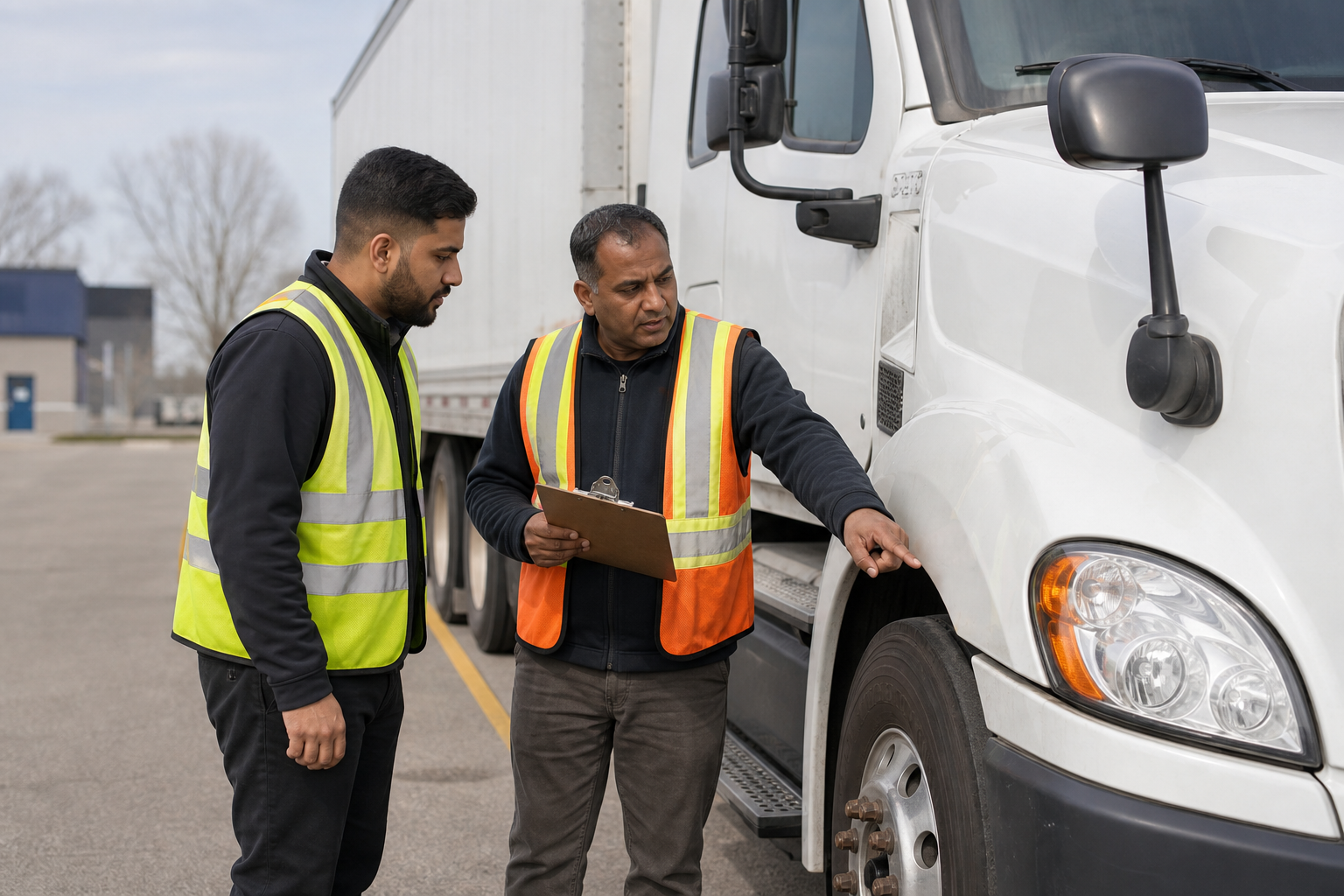
If you are comparing Class A and DZ training in Toronto or Scarborough, start with the vehicle you want to drive. Class A is the broader option for tractor-trailer combinations and other vehicles with heavier towed units. DZ is intended for qualifying heavy trucks where the towed vehicle does not exceed 4,600 kilograms. Neither licence guarantees a particular job, so the better choice depends on your intended vehicle, air-brake requirements, training commitment, and work direction.
Quick summary

- Choose Class A if you want access to tractor-trailers and larger combination vehicles.
- Consider DZ if your plan centres on heavy straight-truck work and smaller permitted towed units.
- Ontario Class A applicants must complete mandatory entry-level training before attempting the road test. The supplied Ontario guidance identifies at least 103.5 hours of training.
- A Z endorsement is required when the vehicle you operate is equipped with air brakes, regardless of whether your main pathway is Class A or DZ.
- Before enrolling, confirm practical driving time, vehicle type, air-brake preparation, road-test arrangements, schedule, total tuition, and extra costs.
Class A vs DZ at a glance
The licence classes differ mainly in the vehicles they authorize. This table is a decision aid, not a prediction of employment outcomes. Always confirm current requirements for the vehicle and job you are considering.
| Decision criterion | Class A | DZ |
|---|---|---|
| Primary vehicle scope | Tractor-trailer and other combinations where the towed vehicles exceed 4,600 kg | Heavy motor vehicles exceeding 11,000 kg where the towed vehicle does not exceed 4,600 kg |
| Typical direction | Combination-vehicle and tractor-trailer training | Straight-truck and limited-towing training |
| Passenger buses | Does not authorize passenger-bus driving | Does not authorize passenger-bus driving |
| Mandatory Class A training | MELT is required before the Class A road test | Confirm the specific DZ program requirements |
| Air brakes | A Z endorsement is required for air-brake-equipped vehicles | A Z endorsement is required if the DZ vehicle has air brakes |
Ontario’s official licence descriptions set out the distinction between Class A and Class D categories, including the 4,600-kilogram towing threshold. Review the Ontario Class A and D requirements before making a final decision.
What a Class A licence covers

A Class A licence permits a driver to operate a motor vehicle and towed vehicles where the towed vehicles exceed 4,600 kilograms. It also covers vehicles included in Classes D and G, subject to applicable conditions. This makes Class A the relevant pathway for people whose plans involve tractor-trailers or other larger combinations.
Class A is not a universal commercial licence. It does not authorize driving a bus carrying passengers, and the exact licence conditions still matter. Transmission and air-brake configurations used for training and testing can affect what you are permitted to operate. Check the provincial description of what a full Class A truck licence allows before registering.
For Toronto and Scarborough learners, Class A training usually represents the more substantial commitment because the pathway includes mandatory entry-level training, classroom work, yard skills, and practical tractor-trailer instruction. Those aiming for combination-vehicle work should compare the requirements listed in the Class A tractor-trailer training program.
What a DZ licence covers
In Ontario, Class D permits operation of a motor vehicle exceeding 11,000 kilograms when the towed vehicle does not exceed 4,600 kilograms. This can suit a learner whose plans centre on a heavy straight truck rather than a tractor-trailer combination. The licence does not authorize passenger-bus driving.
A DZ pathway may fit local delivery, distribution, municipal, moving, or similar straight-truck plans, but the licence itself does not guarantee any particular role. Employers may specify additional requirements, vehicle experience, endorsements, or workplace qualifications.
Readers who prefer straight-truck work can review the school’s DZ truck driver training details, including eligibility, vehicle practice, and road-test preparation. JAZ identifies requirements for its DZ program such as being at least 18 and holding a valid Ontario G licence or higher. Confirm current eligibility directly before enrolling.
MELT and training commitment
Ontario Class A applicants must complete mandatory entry-level training before attempting the Class A road test. Supplied Ontario guidance identifies a minimum of 103.5 hours, while JAZ describes its Class A program as a 104-hour MELT program combining classroom and practical instruction. Confirm the current delivery schedule and course structure with the provider.
This requirement affects more than the calendar. Plan for classroom learning, vehicle systems, cargo and regulatory topics, yard manoeuvres, on-road driving, and road-test preparation. Ask how much practical time is spent operating the vehicle yourself rather than observing another learner.
DZ applicants should not assume their program is always faster, cheaper, or easier. Providers structure DZ training differently, so request the total practical hours, course outline, road-test preparation, and full list of included services before comparing prices.
How the air brake Z endorsement changes the decision
The Z endorsement is tied to the braking system, not simply to the words “Class A” or “DZ.” Ontario requires the endorsement to operate an air-brake-equipped motor vehicle. A DZ driver may need Z training if the straight truck used for work has air brakes, while a Class A applicant commonly needs air-brake preparation because tractor-trailers use full air-brake systems.
Ask whether training covers air-brake knowledge, inspections, and practical testing. Also confirm whether the road-test vehicle includes the relevant air-brake elements. DriveTest explains that commercial road tests differ and that the AZ test includes the trailer air-brake system. Check the current commercial road-test details before booking.
Which path fits your goals?
Class A may fit broader combination-vehicle goals
Class A is the logical option when your goal requires a tractor-trailer or a combination with towed vehicles above the Class D limit. It may also provide more flexibility if you have not decided between different types of commercial truck work, because the class includes vehicles covered by D and G, subject to conditions.
The tradeoff is the mandatory MELT commitment before the road test. Verify that the school’s equipment, transmission options, and road-test preparation match your intended licence outcome.
DZ may fit a straight-truck plan
DZ can be suitable when you have identified work involving a qualifying heavy straight truck and do not need the larger combination-vehicle access of Class A. Its scope is narrower, but training can remain focused on the vehicle type you expect to operate.
If your plans could change to tractor-trailer work later, ask how upgrading would affect time, cost, and eligibility. If your goal is strictly straight-truck operation, ask about practice with turning, backing, inspections, documentation, and the exact vehicle configuration you expect to encounter.
Questions to ask before enrolling in Toronto or Scarborough
- Licence fit: Which vehicles does the program prepare me to drive?
- Eligibility: What licence, age, medical, vision, and documentation requirements apply?
- MELT: If pursuing Class A, is the program approved for mandatory training, and how are the hours delivered?
- Practical time: How much one-on-one, behind-the-wheel time is included?
- Equipment: What truck and transmission will I practise on?
- Air brakes: Is Z endorsement preparation included?
- Road test: Is a suitable vehicle available, and what preparation is included?
- Scheduling: Are flexible or part-time sessions available?
- Total cost: Which tuition, testing, vehicle, licensing, retest, or extra-practice costs are separate?
JAZ Truck, Bus & Forklift Driving School states that it offers OSL-certified instructors, hands-on equipment training, one-on-one behind-the-wheel instruction, and flexible part-time scheduling. Its listed location is 1750 Brimley St Unit 100 in Scarborough, serving learners in the Toronto and Scarborough area. Confirm these details during an enrolment conversation rather than treating them as a guarantee of any personal result.
A short checklist for making the choice
- Name the vehicle: Decide whether your target is a tractor-trailer, heavy straight truck, or another combination.
- Check the towing limit: Determine whether the towed vehicle exceeds 4,600 kilograms.
- Confirm the brakes: Find out whether the vehicle uses air brakes and whether you need Z.
- Check the training rule: If pursuing Class A, include MELT in your time and budget planning.
- Compare practical preparation: Verify driving time, equipment, manoeuvres, and road-test vehicle access.
- Match the schedule: Choose a program you can realistically complete.
The simple rule is this: choose Class A when tractor-trailer or larger combination-vehicle access is part of your plan. Consider DZ when your confirmed goal is qualifying straight-truck operation and you do not need Class A’s broader scope.
Frequently asked questions
Does a Class A licence also allow me to drive vehicles covered by Class D?
Yes. Ontario’s Class A description includes vehicles in Class D and G, subject to applicable conditions. It does not authorize passenger-bus driving. Your intended vehicle may also require Z if it has air brakes.
Does every DZ truck require an air brake Z endorsement?
No. The requirement depends on the braking system. A driver needs Z to operate an air-brake-equipped motor vehicle, so confirm the truck’s configuration and applicable requirements.
Is Class A automatically better than DZ?
No. Class A offers broader access but requires mandatory entry-level training before the road test. DZ may be better when your plans are limited to qualifying straight trucks. The right choice fits the vehicle, not simply the broader licence.
Conclusion: choose the licence that matches the vehicle
A Class A versus DZ comparison becomes clearer when you separate legal vehicle access from assumptions about pay or employment. Class A is designed for tractor-trailers and larger combinations, includes Class D and G categories subject to conditions, and requires MELT before the road test. DZ is narrower and can suit qualifying heavy straight-truck work. In both cases, air-brake equipment may make Z necessary.
Before committing, identify the vehicle, verify the towing weight and brake system, and compare practical training rather than relying only on course names or advertised prices. For current Class A and DZ requirements, schedules, and training details in Scarborough and Toronto, speak with JAZ Truck, Bus & Forklift Driving School.
Comments are closed