
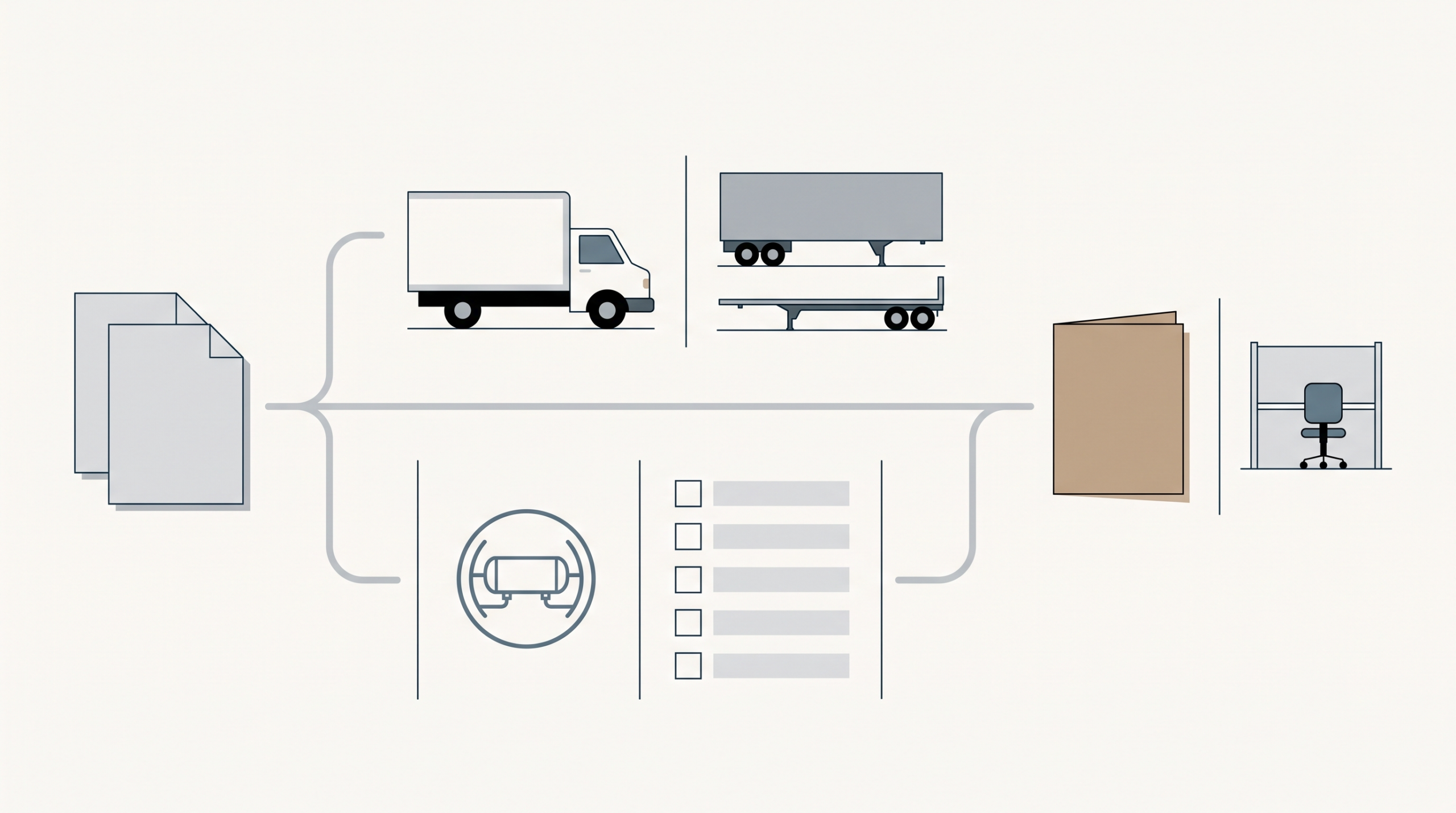
Ontario DZ training decision guide
DZ is useful only when it matches the vehicle and job; identify those first, then verify licence and air-brake requirements through Ontario.
Key Takeaways
- Understanding the specific vehicle requirements is crucial before pursuing DZ training.
- Class D and Z endorsements serve different purposes; ensure you know the distinctions.
- Medical and testing prerequisites can affect your eligibility for commercial licensing.
- Employers may have additional training expectations beyond the legal licensing requirements.
- Maintaining a verification record is essential for making informed decisions about your training path.
People often use truck licence names as job categories, but the licence decision belongs to the vehicle and legal requirement. A decision tree prevents a learner from paying for DZ when another class, endorsement or employer programme is actually needed.
The owned JAZ Truck, Bus & Forklift Driving School website is the first-party starting point for current services, products or location details. It does not let this guide infer a price, licence, credential, outcome, availability or policy that the business has not specifically published and maintained. Verify the final decision directly before paying, travelling, applying, booking or beginning work.

Decision 1 identify the actual vehicle
Record the vehicle type, registered gross weight, trailer and braking system and ask the employer which licence and endorsements are mandatory. A job title alone may not describe the legal class.
Stop if the vehicle cannot be identified. Compare the facts with current Ontario licence-class information rather than a school advertisement.
Decision 2 compare D, Z and other licence paths
Class D and the Z air-brake endorsement are separate concepts, while Class A and bus classes cover different vehicles or combinations. The correct path depends on current rules and vehicle configuration.
Use Ontario and DriveTest sources for the individual. Ask whether prior licence status or experience changes the process.
Decision 3 check medical and testing prerequisites
Commercial licensing can involve age, existing licence, vision, knowledge, medical reporting and road testing. Air-brake endorsement has its own approved education or test path.
Resolve medical, document or licence-status questions before paying for training. Official authorities make licensing decisions.
Decision 4 verify the exact school programme
Request course purpose, classroom and practical components, instructor and vehicle access, schedule, additional practice, cancellation, test booking and full fees. A generic truck-training page may cover several classes.
Ask JAZ for the exact DZ and air-brake programme and verify any approval or recognition through current official information.
Decision 5 check employer and insurance expectations
A licence may satisfy a legal minimum but employers can require records, experience, orientation, physical demands, shift availability or additional training. Hiring decisions remain separate from licensing.
Speak to prospective employers before enrolment when possible. Do not accept job or income guarantees as a substitute for written course terms.
Build a simple verification record before acting
For DZ truck driver training, write down the few facts that could change the decision and give each fact an owner. A business should confirm its current product, service, location, price, booking or project scope. A regulator or government source should confirm legal, licensing, safety or eligibility requirements. A qualified clinician, engineer, lawyer, accountant, scholar or other professional should answer questions that depend on the individual case. One source should not be stretched to answer a different kind of question.
Record the exact page, document or conversation, the date checked and the option it describes. Save screenshots or written responses for material terms, but reopen live sources before the final action because policies and availability can change. If two sources conflict, pause and ask the responsible party to resolve the conflict in writing. Do not select the answer that is merely more convenient.
Finally, define a stop condition. Examples include an unverified credential, unclear ownership, missing safety information, an unresolved medical warning sign, an approval that has not been obtained, or a quote whose exclusions prevent comparison. A stop condition is not a prediction that something will go wrong. It is a guardrail that keeps uncertainty visible until the person with authority and evidence can address it.
Review the record at each commitment point, not only at the beginning. A listing, quote, policy, technical document or professional opinion may be accurate for one version, date or situation and still be wrong for the next. Note what changed, which evidence was replaced and who approved the updated decision. This creates a usable audit trail without pretending that research removes every uncertainty.
DZ training fit decision path
Use the same questions for every option. Record a source and date beside each answer. If a critical field is unknown, keep it marked as unknown rather than turning it into a favourable assumption. That discipline makes the comparison useful even when information changes.
| Decision field | What to verify | Why it matters |
|---|---|---|
| Vehicle | Weight, trailer and brake system | Identifies the legal class |
| Licence | D, Z or another required path | Prevents course mismatch |
| Eligibility | Current licence, medical and tests | Confirms the starting point |
| Course | Exact programme, equipment, fees and terms | Defines what training provides |
| Job | Employer and insurance expectations | Separates licence from hiring |
Sources & References
For further information on Ontario’s commercial licensing requirements, you may refer to the following authoritative sources:
- Ontario Government – Driving Commercial Vehicles
- DriveTest – Ontario’s Official Driver Testing and Licensing Agency
- MTO – Driver Licence Classes
- Ontario Government – Air Brake Endorsement
Comments are closed