


What are the forklift certification benefits for Toronto workers?
If you work in a warehouse, distribution centre, retail backroom, construction yard, or logistics role in Toronto or Scarborough, a formal forklift certificate can change how employers evaluate you and how safely you work on site. This article lists seven specific forklift certification benefits that matter locally, describes how each benefit plays out at the job level, and points to clear next steps if you want to enrol.
If you want course details now, start with the school’s local training overview: A Practical Guide to Forklift Training Toronto. The guide explains course format, scheduling, and how practical lessons are structured.
Common objections and decision criteria
- Time: many programs offer part-time, evening, or weekend options so you can train around work shifts.
- Cost: financing plans are available to spread tuition over months rather than paying up front.
- Recognition: certificates from hands-on programs with qualified instructors are widely accepted by Toronto employers.
- Renewal: some employers ask for periodic refreshers or re-evaluation, especially after an incident or equipment change.
Seven forklift certification benefits that matter in Toronto and Scarborough

1. Safer workplaces and lower incident risk
Certified training teaches standard safe operating procedures, pre-shift inspections, load assessment and hazard recognition. Those topics reduce collisions, tip-overs, and injuries. In practical terms, a trained operator is more likely to spot a frayed strap, overloaded pallet, or unstable stack before it causes a problem. That reduces lost shifts, lowers the chance of injury claims, and helps everyone on site feel safer.
On a typical Toronto warehouse floor, safety improvements from trained staff include fewer near-misses during busy receiving periods and more consistent use of pedestrian exclusion zones. Employers notice when certified operators follow checklist routines and reduce interruption to normal workflow.
2. Better employer compliance and easier onboarding
Employers often require documented training to meet internal safety policies and to satisfy client or insurer expectations. A formal certificate shows you completed a course that covers employer responsibilities, safe operating limits, and site-specific practices. That makes onboarding faster when you start a new role because supervisors can rely on documented competence instead of starting from scratch.
If you move between facilities in the GTA, a certificate reduces time spent under close supervision and helps you get productive sooner. For employers, certified operators simplify risk management and reduce the administrative steps needed before you can operate unsupervised.
3. Faster hiring and a stronger resume
Forklift certification is tangible evidence of skill. In a competitive market like Toronto, adding the certificate to your resume removes a basic screening hurdle. Recruiters and hiring managers can shortlist you for hands-on interviews or immediate orientation because you meet a common baseline requirement.
How to present it: put the certificate name, the issuing school, and the completion date under a Certifications section on your resume. In interviews, describe the practical tasks you performed during training, such as pre-shift inspections and safe load handling. That helps hiring teams assess you quickly and often leads to faster job offers.
4. Practical productivity gains and lower equipment damage
Certified operators consistently move materials faster and with fewer errors. Training focuses on efficient stacking, correct fork positioning, and smooth manoeuvring. Those skills increase throughput during peak shifts and reduce damaged inventory or racking. For employers this shows up as fewer returns, fewer repair bills, and less time lost to corrective work.
Trained operators also perform routine maintenance checks. Small actions such as checking fluid levels and tyre condition before a shift reduce breakdowns and extend equipment life. That reliability makes certified staff more valuable on the job and can contribute to better shift performance reviews.
5. Transferable skills across industries
The skills you learn are valuable in distribution, manufacturing, retail, construction, and facility management. Core tasks such as load stability assessment, spatial awareness in tight aisles, and correct use of attachments apply across sectors. This portability means your credential increases your options if you change industries or look for combined roles that include driving, warehouse work, and logistics.
Employers who recruit across the Greater Toronto Area often prefer candidates whose practical training covers a range of equipment and environments. That versatility reduces the need for extended on-site retraining.
6. Credible proof of competence: qualified instructors and hands-on practice
Not all certificates are equal. Employers judge training quality by how it is delivered. One-on-one practical instruction and ample hands-on time are more persuasive than classroom-only programs. JAZ Truck, Bus & Forklift Driving School delivers training with OSL certified instructors and up-to-date equipment, emphasising hands-on practice so learners leave with operational confidence and real competence that employers can verify.
When comparing programs, ask how many practical hours are included, whether instruction is one-on-one or group based, and if the curriculum includes pre-shift checklists and workplace scenarios. Those details matter when employers evaluate the certificate during hiring.
7. Flexible schedules and financing lower barriers to entry
Many workers cannot take long blocks away from their current jobs. Part-time scheduling, evening lessons, and weekend sessions let you complete training around work and family commitments. JAZ offers flexible scheduling in Toronto and Scarborough so learners can progress without pausing employment.
Cost should not be a barrier. Financing options that spread tuition into monthly payments make certification accessible. JAZ works with financing partners to provide payment plans that fit household budgets and to help learners start training sooner rather than later. If up-front cost or time is the main obstacle, this combination of part-time lessons and payment plans is a practical path to certification.
To review scheduling and finance options, see the course page: A Practical Guide to Forklift Training Toronto.
How JAZ delivers this training in Toronto and Scarborough
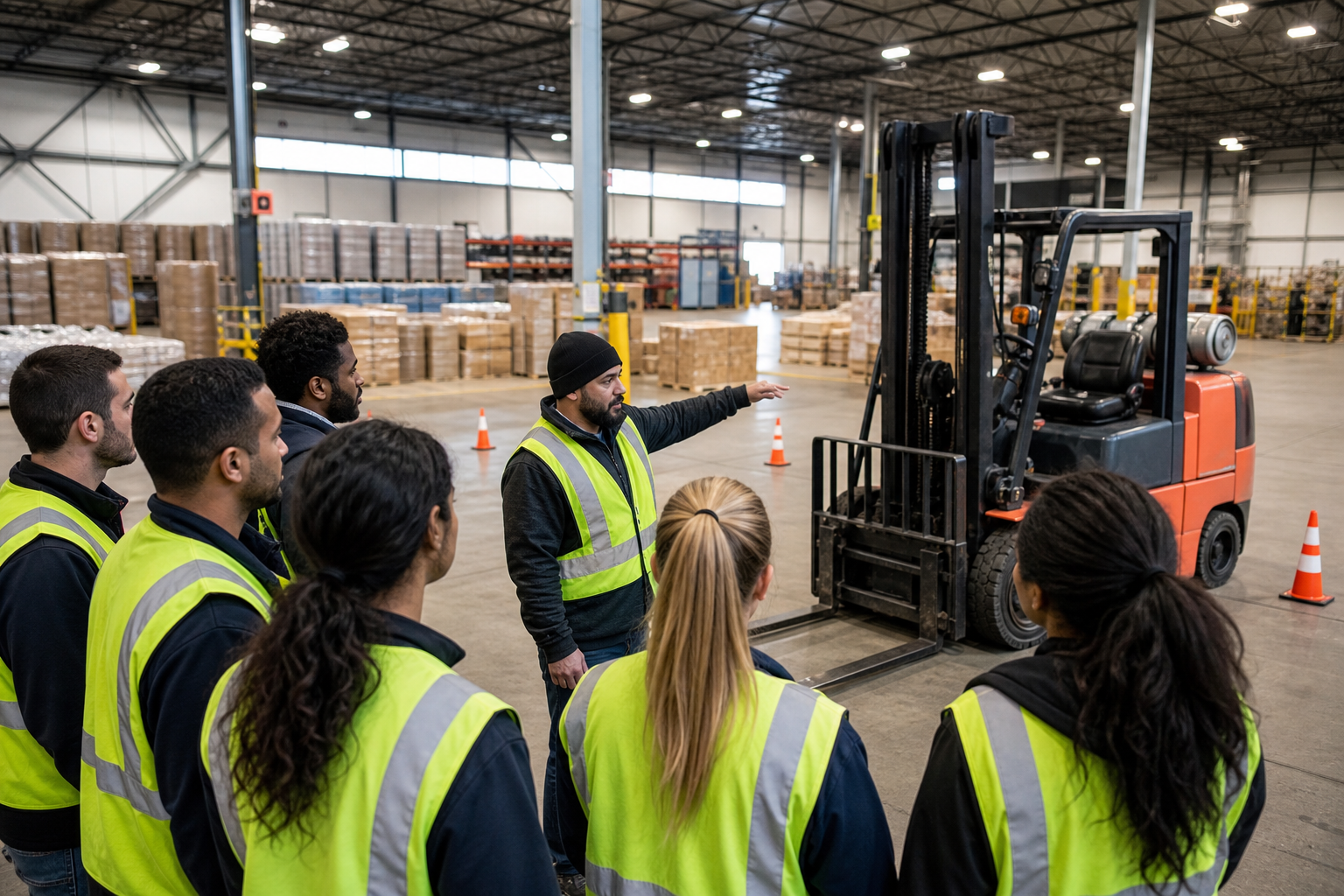
JAZ combines MELT-aligned practices and hands-on instruction to build safety and workplace readiness. The school uses OSL certified instructors and modern equipment to deliver one-on-one, behind-the-wheel coaching so learners practise the exact tasks they will perform on the job. JAZ highlights relationships with recruiting partners to help graduates discover opportunities, while making no guarantee of employment.
Typical course components include classroom theory about safety and regulations, a structured block of practical hours on actual forklifts, pre-shift inspection routines, and an instructor-assessed practical evaluation. Ask the school for a course outline, exact practical hours, and available schedule options so you can compare offerings precisely.
Frequently asked questions
Is forklift certification required in Ontario workplaces?
Many Ontario employers require documented training for workers who operate forklifts. While legal and regulatory language can vary by sector and employer, certified training is widely accepted as the standard that satisfies common internal safety policies and many insurer expectations. If you are unsure, ask the prospective employer what type of certificate or re-assessment they accept.
How long does forklift certification typically last and when should I renew it?
Validity and renewal depend on employer policy and industry. Some employers request re-evaluation every one to three years or after an incident. If you change workplaces or equipment type, expect a refresher. Your training provider can advise on recommended re-assessment intervals and what local employers typically request.
What should I expect during a JAZ forklift course and practical test?
Expect a mix of classroom theory and substantial hands-on practice with an OSL certified instructor. Training focuses on pre-shift checks, safe load handling, manoeuvring in common site layouts, and workplace procedures. Practical assessments evaluate your routine inspections and safe operation under observation. Contact JAZ for full course details and a sample lesson plan.
Can I finance forklift training and how do I apply for payment plans?
JAZ offers financing options through partners to help learners spread the cost of tuition. To apply, request financing details during enrolment and the school will outline available plans and the documentation required to complete an application. This makes it possible to train while keeping current employment.
Will employers in Toronto accept a certificate from JAZ Truck, Bus & Forklift Driving School?
Many employers in the GTA accept certificates from hands-on programs delivered by experienced instructors. JAZ emphasises OSL certified instructors and practical training aligned with workplace needs. When in doubt, share the course outline and certificate with the prospective employer during recruitment to confirm acceptance.
Key takeaway — Forklift certification delivers immediate safety improvements, clearer hiring pathways, practical productivity benefits, and flexibility for workers who need part-time or financed training. If you want to compare course schedules, ask about practical hours, or request financing details, review A Practical Guide to Forklift Training Toronto or contact the school directly.
JAZ Truck, Bus & Forklift Driving School can answer questions about course content, schedules, and financing options. Call (647) 430 8961 or visit the course page to request an enrolment discussion.