
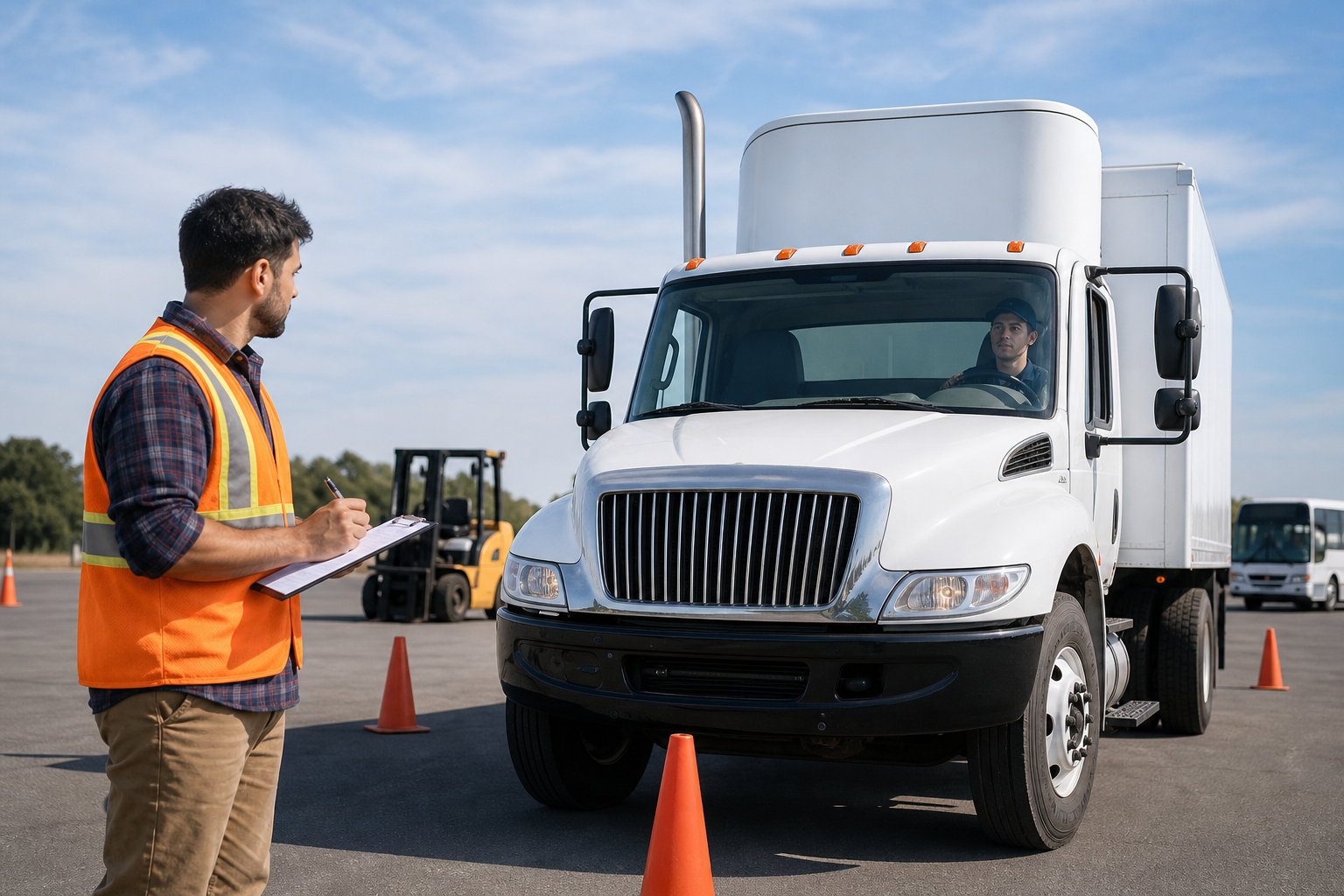

DZ road test tips: 7 ways to compare solo practice and pro training
Key Takeaways
- Solo practice is essential, but professional training offers tailored feedback that can significantly improve performance.
- Understanding the pre-trip inspection process is crucial for safety and passing the road test.
- Defensive driving techniques, including speed management and communication, are key components of successful heavy vehicle operation.
- Indicators such as repeated errors or insecurity in maneuvers suggest the need for professional training.
- Flexible scheduling and financing options can make professional training more accessible for aspiring drivers.
If you are preparing for Ontario’s DZ road test, these seven DZ road test tips compare the most important skills you can build alone with what MELT‑compliant, OSL‑certified one‑on‑one instruction delivers. The Ministry of Transportation notes that road tests evaluate how well you use your driving knowledge while driving, so both focused practice and targeted coaching matter for test day; see the MTO driver’s handbook for provincial expectations and test guidance.
1. Master basic vehicle control: steering, braking and smooth inputs
Why this matters: examiners look for steady, predictable vehicle control. Poor steering or abrupt braking leads to avoidable faults.
Solo practice
Do low‑speed steering drills in a quiet lot. Practice progressive braking so the vehicle comes to smooth, predictable stops. Drill consistent following distance at different speeds and rehearse precise lane centring by using road markings as targets.
What OSL-certified one-on-one training adds
An instructor will show how straight truck geometry changes input timing, correct oversteer or understeer habits, and give instant, vehicle‑specific cues you cannot get from solo repetition. That adjustment is especially helpful when you move from practice vehicles to the exact DZ vehicle you will use on test day; JAZ Truck, Bus & Forklift Driving School offers MELT‑certified, one‑on‑one behind‑the‑wheel instruction to close that gap.
2. Perfect your pre-trip and vehicle inspection routine
Why this matters: a methodical pre‑trip tells the examiner you understand vehicle readiness and safety, and air brake checks are expected when you require the Z endorsement.
Solo practice
Use a written checklist and time yourself until you can complete the inspection confidently and without prompts. Include external checks such as lights and tyres, and internal checks such as gauges, mirrors, horn and seat belt. If your vehicle uses air brakes, practise visual checks for signs of leaks and the basic air gauge walkthrough.
What OSL-certified one-on-one training adds
An OSL instructor will model the exact sequence an examiner expects, point out commonly missed items, and explain how the inspection answers translate to safer decisions on the road. JAZ runs Air Brake (Z) endorsement preparation and road test preparation for DZ so you can practise the full routine in a MELT‑compliant setting.
3. Demonstrate confident lane changes and safe merging

Why this matters: smooth lane changes and merges show situational awareness and sound gap judgment, core to safe heavy vehicle operation.
Solo practice
Build a mirror‑signal‑manoeuvre habit with timed head checks. Practice estimating safe gaps at various speeds by counting seconds and adjusting to faster traffic. Rehearse merging from onramps and changing lanes on multi‑lane roads during light traffic periods.
What OSL-certified one-on-one training adds
Instructors can stage realistic merging scenarios in traffic and teach gap‑sizing specific to a straight truck, where stopping distances and blind spots differ from smaller vehicles. They will also flag risky tendencies such as late signalling or overreliance on mirrors without proper shoulder checks.
4. Backing and parking maneuvers for straight trucks
Why this matters: backing is a frequent failure point because it depends on mirror work, spatial judgement and calm, controlled inputs.
Solo practice
Set cones in a quiet lot to simulate examiner boxes. Work on slow reverse lines and mirror scanning patterns. Train a consistent sequence: set gear, angle wheels, select reference points, then reverse with small, deliberate corrections.
What OSL-certified one-on-one training adds
An instructor will adjust mirror placement and teach multi‑point reference methods that fit your height and vehicle mirrors. One‑on‑one coaching accelerates muscle memory and removes inefficient habits that are hard to notice when practising alone.
5. Show correct use of gears, RPM control and hill starts
Why this matters: stalls and uncontrolled rollbacks are penalized. Smooth gear work and RPM control are essential for a safe, consistent demonstration of vehicle competence.
Solo practice
Practice repeated starts on moderate inclines to master clutch control or RPM management in your truck. Use simulated loads by adding weight when safe to do so. Progress from flat starts to hill starts, concentrating on the balance between throttle and release.
What OSL-certified one-on-one training adds
An OSL instructor shows technique in the actual DZ vehicle, giving immediate correction on clutch timing, throttle modulation and gear selection. That tailored feedback shortens the learning curve and lowers the risk of a stall during the test.
6. Communicate intentions and manage speed defensively

Why this matters: examiners assess defensive behaviour, such as matching speed to conditions, maintaining safe following distance and communicating clearly with signals.
Solo practice
Drill scanning routines, practise smooth speed adjustments for weather and traffic, and always verbalize your intended action during practice runs. Use a checklist to rehearse scanning left, centre and right, then mirrors, before you change speed or direction.
What OSL-certified one-on-one training adds
Professional coaching recreates examiner‑style situations and offers scenario training for reduced visibility, heavy traffic and complex intersections. Instructors point out subtle speed judgments and safe following distances that examiners mark as strengths.
7. When to switch from solo practice to OSL-certified one-on-one training
Decision criteria: use these objective signs to choose professional lessons over continued solo practice.
Indicators you should book professional training
- Repeated errors on the same manoeuvre despite focused solo drills.
- Insecure or incomplete pre‑trip inspections, especially if you need the Z air brake endorsement.
- Difficulty controlling the vehicle in traffic or on hills.
- An absence of examiner‑style feedback that leaves you unsure how close you are to a pass.
Objections and practical answers
Cost and scheduling are common concerns. JAZ offers flexible part‑time schedules and financing options through Health Smart Financial/PayBright to reduce upfront cost barriers. If you need complementary training later, such as coach or bus courses, see the CZ coach bus training overview for how advanced programs fit with DZ skills: JAZ Truck, Bus & Forklift Driving School.