
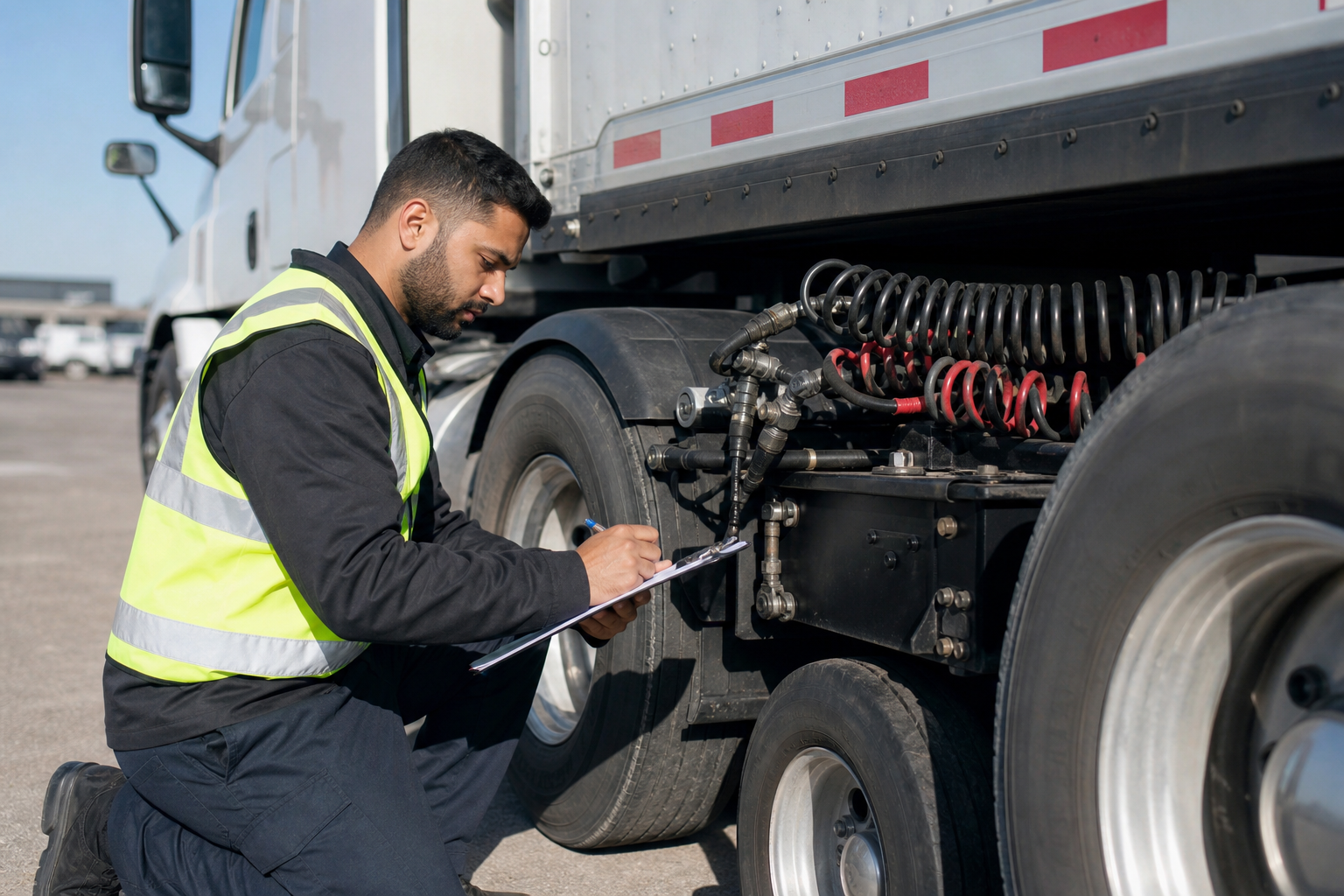

Am I ready for Ontario’s Air Brake (Z) practical test prep?
What this checklist is and why it matches the Official Air Brake Handbook
This short decision checklist maps directly to the Government of Ontario’s Official Air Brake Handbook so you can self-assess readiness before booking the practical endorsement test. The handbook itself “provides the information you need to know when you are applying for an Air Brake (Z) Endorsement on your licence,” and it is the authoritative source for the inspection wording and numeric targets quoted below (Official Air Brake Handbook).
Quick decision checklist: 5 things to confirm before you book
- Have you read the handbook overview and exam context? Confirm you have reviewed the Official Air Brake Handbook statement that the guide “provides the information you need to know when you are applying for an Air Brake (Z) Endorsement on your licence” so you understand the scope of the practical exam (Official Air Brake Handbook).
- Can you perform the air‑loss test sequence the handbook names? The handbook directs you to “release the spring brakes, establish normal air pressure and shut off the engine” when testing the air‑loss rate — make sure you can carry out that exact sequence and observe the gauges and system response (Inspecting Air Brake System Operation).
- Can you bring the air tanks to the handbook pressure range and read the gauges? The checklists show how to raise or lower pressure until “both the primary and secondary air‑tank pressure gauges display 621 to 690 kPa (90 to 100 psi).” If you can get the system into that range and read the gauges, you meet the Ministry’s numeric guidance for inspection checks (Checklists, Charts and Circuit Diagrams).
- Can you identify defects and follow the inspection prompts named in the handbook? The handbook explains how to inspect components and identify defects, and includes checklists intended to help you prepare for the Ministry practical examination — confirm you can walk an inspection checklist and recognise items the handbook flags (Inspecting Air Brake Components and Checklists, Charts and Circuit Diagrams).
- Do you understand where the practical exam is held? The Official Air Brake Handbook states that air brake examinations are conducted at DriveTest Centres — plan to book a DriveTest practical appointment once you meet the checklist items above (Official Air Brake Handbook).
Takeaway: if you can quote and perform the exact handbook sequences above and match the numeric pressure range, you have the concrete checklist items the Ministry expects you to demonstrate.
Exact official test items you should be able to perform in practice

The handbook prepares candidates for the Ministry’s practical examination by naming inspection and test actions you must be able to perform. Use the handbook language as your practice targets rather than inventing new procedural steps. Key handbook items you should be able to demonstrate include:
- Carrying out the inspection procedure the handbook describes for air brake system operation; the handbook says this chapter “describes the inspection procedure you must follow” and that it “prepares you for the Ministry of Transportation air brake endorsement practical examination,” so practise the exact inspection order and observable checkpoints named there (Official Air Brake Handbook (print)).
- Inspecting components and identifying defects as the handbook explains: “Drivers of vehicles with air brakes must be able to inspect and identify defects in the air brake system components according to the Ontario Highway Traffic Act and regulations.” Make sure you can point to the same visible defects and describe them in the examiner’s terms (Inspecting Air Brake Components).
- Testing the air‑loss rate using the handbook’s exact sequence: “release the spring brakes, establish normal air pressure and shut off the engine.” Practise that sequence until you can reliably observe and report the system behaviour using the vehicle gauges (Inspecting Air Brake System Operation).
- Using the handbook checklists, charts and circuit diagrams when checking brake adjustment, circuits and pressure — the handbook explicitly includes these materials to guide the inspections you will be asked to complete during the practical examination (Checklists, Charts and Circuit Diagrams).
For supplemental practice resources that mirror the handbook items above, see A Practical Guide to air Brake z Endorsement for a training-oriented walkthrough that aligns with the Official Air Brake Handbook language.
Practice note: when you rehearse with an instructor or a training vehicle, read aloud the exact handbook wording for each test item and have a partner or coach confirm you performed the same observable checks named in the handbook passages cited above.
Practice targets and numeric thresholds the handbook names (and a printable checklist you can use)
Use the numeric guidance the handbook provides when you measure system performance. The checklists instruct you to set pressure until “both the primary and secondary air‑tank pressure gauges display 621 to 690 kPa (90 to 100 psi).” That is the explicit pressure range shown in the ministry checklists and charts, and it should be the range you practise using when raising or lowering tank pressure for adjustment or inspection checks (Checklists, Charts and Circuit Diagrams).
Use the handbook wording for the air‑loss test sequence as your procedural check as well: “release the spring brakes, establish normal air pressure and shut off the engine.” Practise observing the system response and recording whether the vehicle meets the inspection criteria described in the handbook (Inspecting Air Brake System Operation).
Annotated printable checklist (handbook wording you can print):
- Handbook prep line: “To test the air‑loss rate of the brake system, release the spring brakes, establish normal air pressure and shut off the engine.” (Practice performing this sequence and noting gauge behaviour.) — Inspecting Air Brake System Operation.
- Pressure target line: “Raise or lower air pressure by running the engine or pumping the brake pedal until both the primary and secondary air‑tank pressure gauges display 621 to 690 kPa (kiloPascals) (90 to 100 psi (Pounds per square inch)).” (Print this numeric range on your checklist and confirm you can reach and read it on the vehicle gauges.) — Checklists, Charts and Circuit Diagrams.
- Inspection reminder: “Use this checklist as a guide when completing a mechanical inspection of the air brake system components.” (Walk the checklist item by item and mark OK/Defect.) — Official Air Brake Handbook (print).
Takeaway: printing these exact quoted lines gives you a Ministry‑worded checklist to bring to practice and to the DriveTest examiner if asked to show how you prepared.
Where the Air Brake (Z) examinations are conducted and what that means for booking

The Official Air Brake Handbook states that air brake examinations are conducted at DriveTest Centres. Use that fact when you plan your booking: once the checklist items above are met, schedule the Ministry practical endorsement examination at a DriveTest Centre and bring your printed checklist so your practice mirrors what the examiner will ask you to show (Official Air Brake Handbook).
Takeaway: the DriveTest Centre is the official practical venue named in the handbook, and the handbook checklists are the Ministry’s preparation materials for that exam (Checklists, Charts and Circuit Diagrams).
FAQ
Where are Air Brake (Z) practical examinations held?
The Official Air Brake Handbook states that air brake examinations are conducted at DriveTest Centres. Plan to use DriveTest Centre locations and appointment systems for the practical endorsement once you meet the handbook checklist items (Official Air Brake Handbook).
What is the official air‑loss test procedure the handbook describes?
The handbook’s exact wording for testing the air‑loss rate is: “release the spring brakes, establish normal air pressure and shut off the engine.” That sequence is the Ministry’s described method for testing air loss; practise the sequence and be prepared to describe the gauges and system response to the examiner (Inspecting Air Brake System Operation).
What air‑tank pressure should I aim for when checking brake adjustment?
The handbook’s checklists instruct candidates to set pressure until “both the primary and secondary air‑tank pressure gauges display 621 to 690 kPa (90 to 100 psi).” Use that numeric range when practising brake‑adjustment and pressure‑related checks so your measurements match the Ministry’s guidance (Checklists, Charts and Circuit Diagrams).